
Chest Recession
Chest Recession: Breathing Warning Sign
By Dr Joann
One important warning sign that parents and caregivers should never ignore is chest recession, also known as chest retractions. Breathing is something we often take for granted—until it becomes difficult. In children, especially infants and young toddlers, signs of breathing distress can be subtle but serious.
Chest recession is not a diagnosis, but a sign that a child is struggling to breathe. Recognising it early and seeking medical attention promptly can be life-saving.

What Is Chest Recession?
Chest recession happens when a child has difficulty breathing and must use extra effort to draw air into the lungs. Instead of the chest expanding smoothly, you may notice the skin being pulled inward during breathing. This pulling in can be seen between the ribs, below the ribs, or above the collarbones, or at the base of the neck.
Normal breathing should look smooth and effortless. Any visible “sinking in” of the chest or neck area is abnormal and indicates that the child is working harder than normal to breathe.
Why Does Chest Recession Happen in Children?
Children’s chest walls are softer and more flexible than adults’. Their ribs and breathing muscles are still developing, which makes abnormal chest movement more noticeable when breathing becomes difficult.
When the airways become narrowed, inflamed, blocked by mucus, or infected, the lungs struggle to pull in enough air. To compensate, the child uses extra muscles around the ribs and neck, causing the chest to pull inward with each breath.
Common Causes of Chest Recession
Chest recession can occur in a variety of respiratory conditions. These include bronchiolitis, which is common in babies and often caused by RSV, pneumonia, asthma attacks, croup, severe viral respiratory infections, foreign body aspiration, where something is stuck in the airway, and severe allergic reactions.
Some of these conditions can worsen rapidly, especially in young children, which is why early medical assessment is essential.
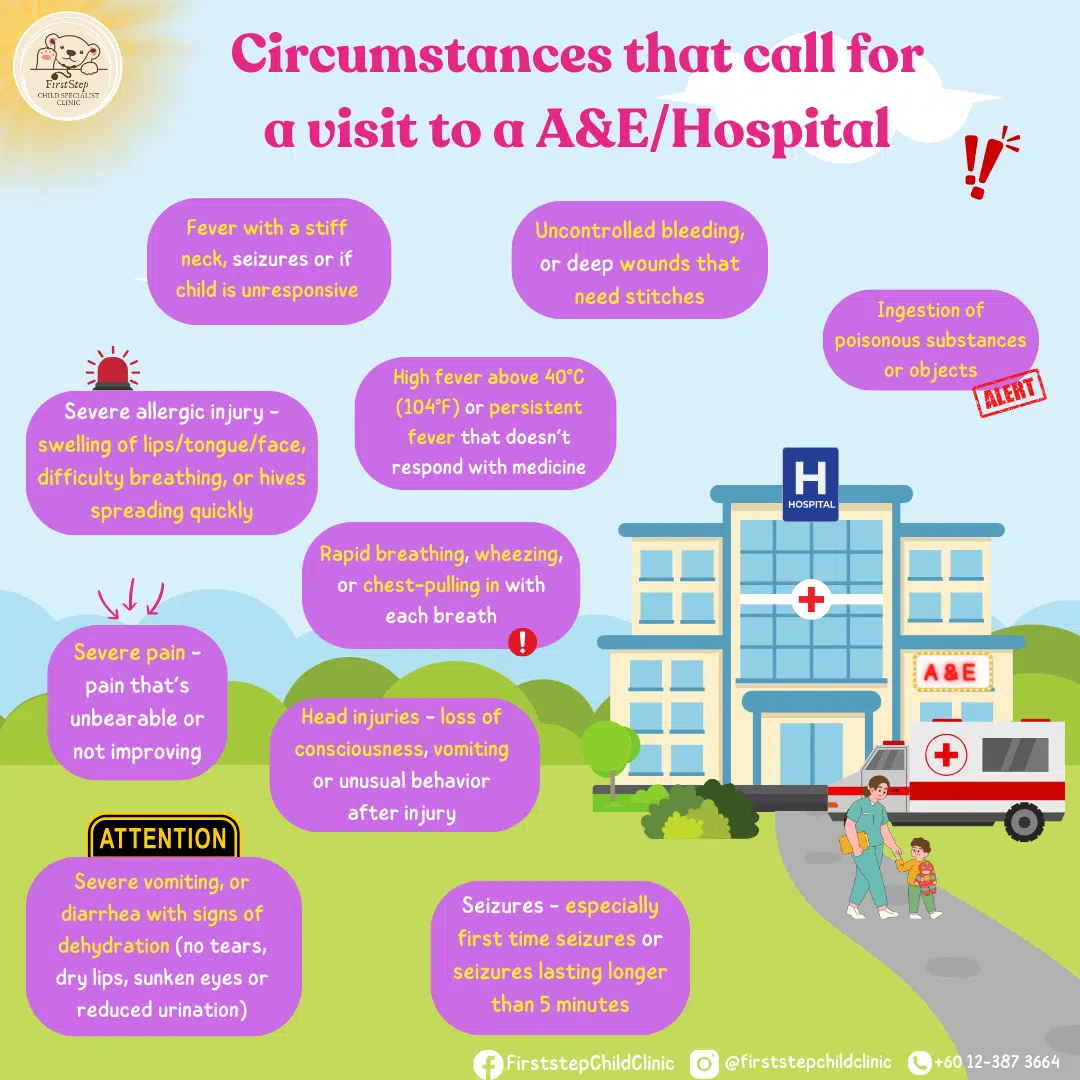
Do you know where to bring your sick child
Other Warning Signs to Watch For
Chest recession rarely occurs on its own. It is often accompanied by other signs of breathing distress, such as fast breathing, noisy breathing including wheezing or harsh sounds, persistent cough, fever with breathing difficulty, flaring of the nostrils, poor feeding or refusal to drink, vomiting after coughing, unusual tiredness, lethargy, or reduced responsiveness.
A very important emergency sign is bluish lips, tongue, or face. This indicates low oxygen levels and requires immediate emergency medical care.
Why Early Medical Attention Matters
Children can deteriorate much faster than adults when they are unwell. Their oxygen reserves are lower, and they may not be able to communicate how uncomfortable or breathless they feel.
Early assessment allows doctors to check oxygen levels, identify the underlying cause of breathing difficulty, and start appropriate treatment promptly. This may include inhaled medications, oxygen support, further investigations, or referral for hospital care if needed.
What Should Parents Do If They See Chest Recession?
If you notice chest recession in your child, do not wait to see if it improves on its own. Bring your child to a clinic or emergency department immediately. Try to keep your child calm, as crying can worsen breathing effort. Avoid giving over-the-counter cough or cold medications unless specifically advised by a doctor.
Trust Your Instincts as a Parent
Parents often sense when something is not right, even before obvious symptoms appear. If your child’s breathing looks different, laboured, or worrying, trust that instinct. It is always safer to have your child checked early rather than delay treatment.
Key Takeaway
Chest recession is a serious warning sign that a child is struggling to breathe. It is never normal and should never be ignored. Prompt medical attention can make a critical difference in your child’s recovery and safety.

Dr Joann Rajah