Japanese Encephalitis (JE)
Japanese Encephalitis (JE)
By Dr. Charlotte Gan
When parents think about mosquito-borne diseases like Japanese Encephalitis (JE) and dengue fever, dengue is often the first that comes to mind—especially in countries like Malaysia, where cases are regularly reported.
Although less commonly discussed, Japanese Encephalitis can have severe consequences, particularly in young children. The good news is that it is largely preventable with the right knowledge and precautions. In this article, I’ll guide you through what JE is, how it spreads, the symptoms to watch for, and most importantly, how you can protect your child.
What Is Japanese Encephalitis?
Japanese Encephalitis is a viral infection caused by the Japanese Encephalitis virus (JEV), which is transmitted through the bite of infected mosquitoes—primarily the Culex species. These mosquitoes typically breed in areas with standing water such as rice paddies, ponds, and poorly drained urban environments.

Poorly drained environments can lead to stagnant water, which becomes an ideal breeding ground for mosquitoes.
Unlike dengue, which spreads rapidly in urban settings, JE is more commonly found in rural or semi-rural areas where there is close interaction between humans, animals, and mosquito habitats.
The virus naturally circulates between animals such as pigs and birds (especially water birds). Humans are considered “dead-end hosts,” meaning that once infected, they do not usually transmit the virus further.
Why Should Parents Be Concerned?
Most JE infections are mild or even asymptomatic. In fact, fewer than 1 in 250 infected individuals develop severe symptoms. However, when the disease does progress, it can become life-threatening and may cause inflammation of the brain (encephalitis).
Children are particularly vulnerable because their immune systems are still developing. Severe cases can result in:
- Permanent neurological damage
- Learning difficulties
- Movement disorders
- Seizures
- In some cases, death
Even among those who survive severe JE, up to 30–50% may experience long-term complications.
Early Signs and Symptoms
One of the challenges with JE is that early symptoms can look very similar to common viral illnesses. This makes it easy to overlook in the initial stages.
Mild or Early Symptoms:
- Fever
- Headache
- Vomiting
- Fatigue or general tiredness
At this stage, it may appear like a simple flu or viral infection. However, parents should remain vigilant—especially if their child has been exposed to mosquito-prone environments.
Warning Signs of Severe Disease
In rare but serious cases, symptoms can escalate quickly, often within a few days. These may include:
- Confusion or altered mental state
- High fever that persists
- Seizures (fits)
- Difficulty speaking or moving
- Muscle weakness or paralysis
- Sensitivity to light
These symptoms indicate inflammation of the brain and require immediate medical attention. Early intervention can make a significant difference in outcomes.
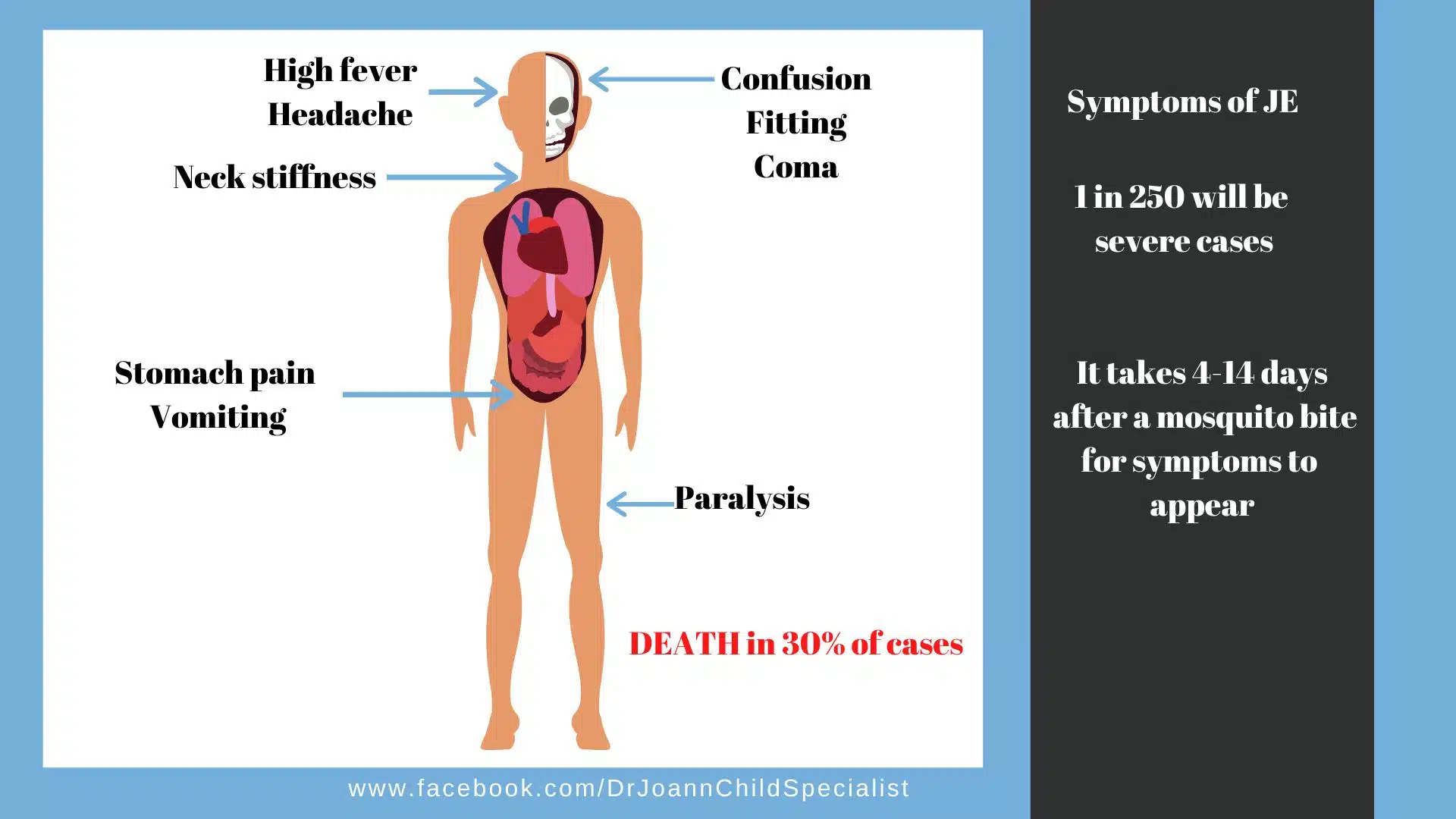
Japanese Encephalitis (JE) severe symptoms
Where Is JE Most Common?
Japanese Encephalitis is found across many parts of Asia and the Western Pacific, including Malaysia. It is more prevalent in:
- Rural farming communities
- Areas with rice cultivation
- Regions with pig farming
- Places with stagnant water
However, urban cases can still occur, especially where mosquito breeding sites are not well controlled.
Parents should be especially cautious during the rainy season, when mosquito populations tend to increase.
How Does JE Spread?
Understanding how JE spreads is key to prevention.
- Mosquitoes bite infected animals (usually pigs or birds).
- The virus multiplies within the mosquito.
- The infected mosquito then bites a human, transmitting the virus.
Importantly, JE does not spread from person to person, so isolation is not necessary for infected individuals.
How to Protect Your Child
The most effective way to prevent JE is by reducing mosquito exposure and considering vaccination where appropriate. Here are practical steps every parent can take:
1. Use Mosquito Repellent
Choose repellents that contain DEET, picaridin, or IR3535. These are safe for children when used as directed. Apply to exposed skin, especially during peak mosquito activity times (dusk and dawn).
2. Dress Your Child Appropriately
Clothing can act as a simple but effective barrier.
- Long-sleeved shirts
- Long pants
- Socks and covered shoes
Light-colored clothing is also helpful, as it is less attractive to mosquitoes.
3. Eliminate Standing Water
Mosquitoes breed in stagnant water, so reducing these sites is crucial.
Check around your home for:
- Flower pots
- Buckets
- Gutters
- Old tires
- Water containers
Empty and clean these regularly to prevent mosquito breeding.
4. Use Physical Barriers
- Install window screens
- Use mosquito nets, especially for infants
- Consider mosquito traps or indoor repellents
These methods add an extra layer of protection, particularly at night.
5. Consider Vaccination
One of the most effective preventive measures against JE is vaccination. The JE vaccine is:
- Safe
- Highly effective
- Recommended in areas where JE is endemic
In Malaysia, JE vaccination may be part of public health programs in certain regions or recommended for children living in higher-risk areas.
Parents often ask: “Does my child really need the vaccine?”
The answer depends on several factors:
- Where you live
- Whether your child spends time in rural areas
- Exposure to mosquito-prone environments
The best approach is to consult your pediatrician, who can assess your child’s risk and provide personalized advice.
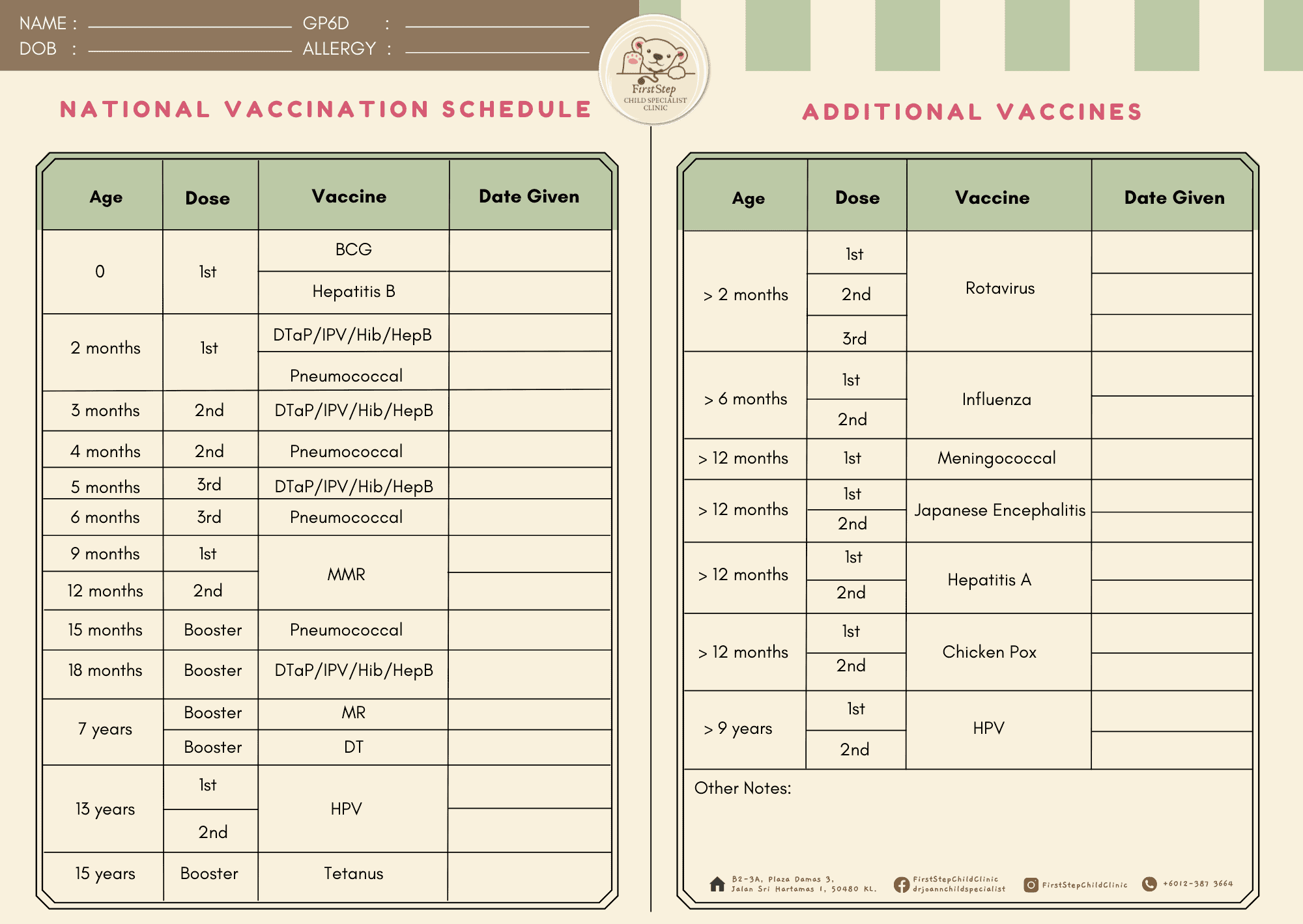
Our vaccine schedule follows the Malaysian childhood immunisation guideline under the National Immunisation Programme (NIP) by the Ministry of Health Malaysia
Common Myths About JE
Let’s address a few misconceptions that may prevent parents from taking action:
Myth 1: “JE is very rare, so I don’t need to worry.”
While severe cases are rare, the consequences can be devastating. Prevention is always safer than treatment.
Myth 2: “My child stays indoors, so they’re safe.”
Mosquitoes can enter homes, especially if windows and doors are not properly screened.
Myth 3: “Vaccines are not necessary.”
Vaccination remains one of the most reliable ways to protect against serious illness.
When Should You See a Doctor?
Seek medical attention immediately if your child:
- Has a persistent high fever
- Shows unusual behavior or confusion
- Experiences seizures
- Has difficulty moving or speaking
Early diagnosis and supportive care can significantly improve outcomes.
Final Thoughts
Japanese Encephalitis may not be as widely discussed as dengue, but it is a disease that parents should not ignore. While the majority of infections are mild, the small percentage that become severe can have life-altering consequences.
The encouraging news is that JE is largely preventable. By taking simple steps—such as reducing mosquito exposure, maintaining a clean environment, and considering vaccination—you can significantly lower your child’s risk.
As parents, we cannot eliminate every danger, but we can make informed decisions that protect our children’s health and future.
If you are unsure about your child’s risk or vaccination needs, don’t hesitate to speak with your doctor. A short conversation today could make a lifelong difference.
Prevention is always better—and when it comes to your child’s health, every precaution matters. 💛

Dr Charlotte Gan is our resident doctor in Firststep Child Specialist Clinic in Ara Damansara
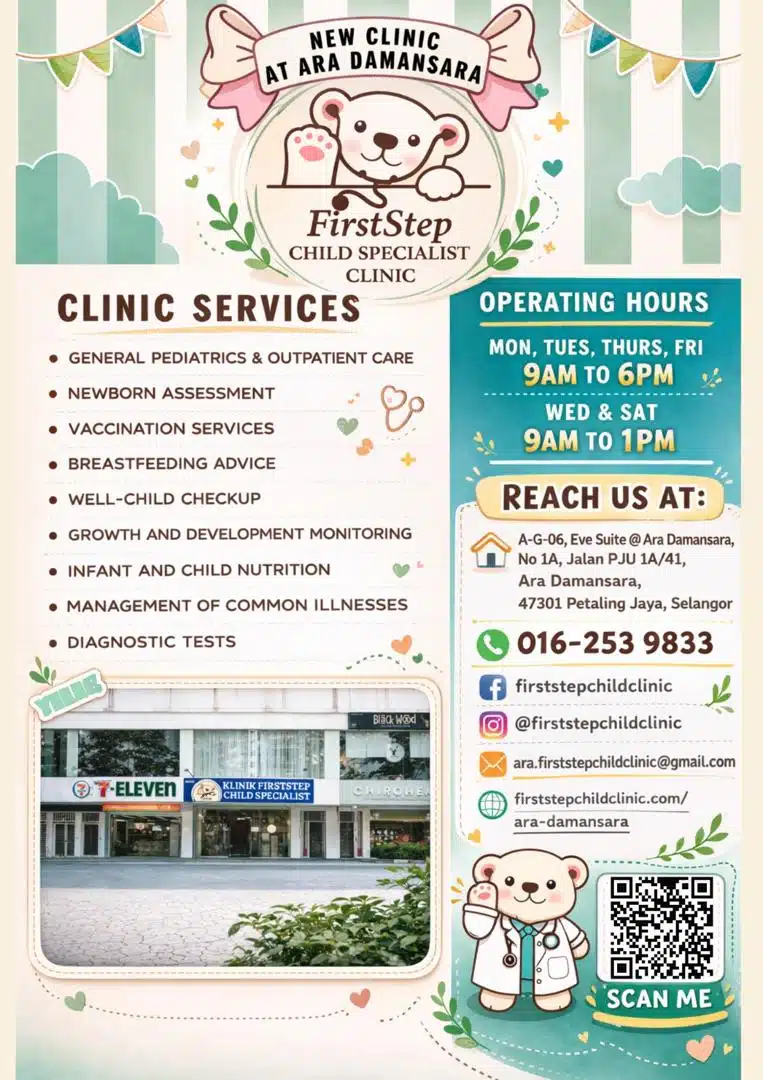
Do visit us with Dr Charlotte Gan in Ara Damansara