Is Your Child’s Medicine Still Safe?
About Medicine Expiry After Opening
By Dr Joann Rajah, Consultant Paediatrician
As parents, we do our best to protect our children’s health. We carefully follow doctors’ instructions, measure medicine doses accurately, and store medications safely. However, one important detail is often overlooked — children’s medicines can expire after opening, even if the printed expiry date has not yet passed.
This misunderstanding is very common. Unfortunately, using medicines beyond their safe period after opening can reduce their effectiveness, delay recovery, or, in some cases, cause harm. This article will help parents understand how long common children’s medicines remain safe after opening, how to store them correctly, and when they should be discarded.
Printed Expiry Date vs Expiry After Opening
The expiry date printed on a medicine bottle applies only to an unopened product stored under ideal conditions. Once a bottle is opened, mixed with water, or exposed to air, light, or moisture, the medicine slowly begins to degrade.
Children’s medicines are particularly sensitive because many are in liquid form, some require mixing with water, and most are used repeatedly over several days. Each time a dosing syringe or dropper is inserted into the bottle, bacteria can be introduced. As a result, the medicine may no longer be safe or effective even though the printed expiry date looks reassuring.
Antibiotic Syrups Require Strict Attention 🧊
Antibiotics for children are commonly dispensed as powders that must be mixed with water before use. Once mixed, the medicine becomes less stable.
After reconstitution, antibiotic syrups are usually safe for only 7 to 14 days, depending on the type prescribed.
Using antibiotics beyond this period can reduce their ability to treat infection properly. Incomplete or ineffective antibiotic treatment may lead to prolonged illness and contribute to the growing problem of antibiotic resistance. Parents should also avoid keeping leftover antibiotics for future use, as each illness requires proper assessment and the correct antibiotic choice.
Cough and Cold Syrups: Not for Long-Term Storage 🤧
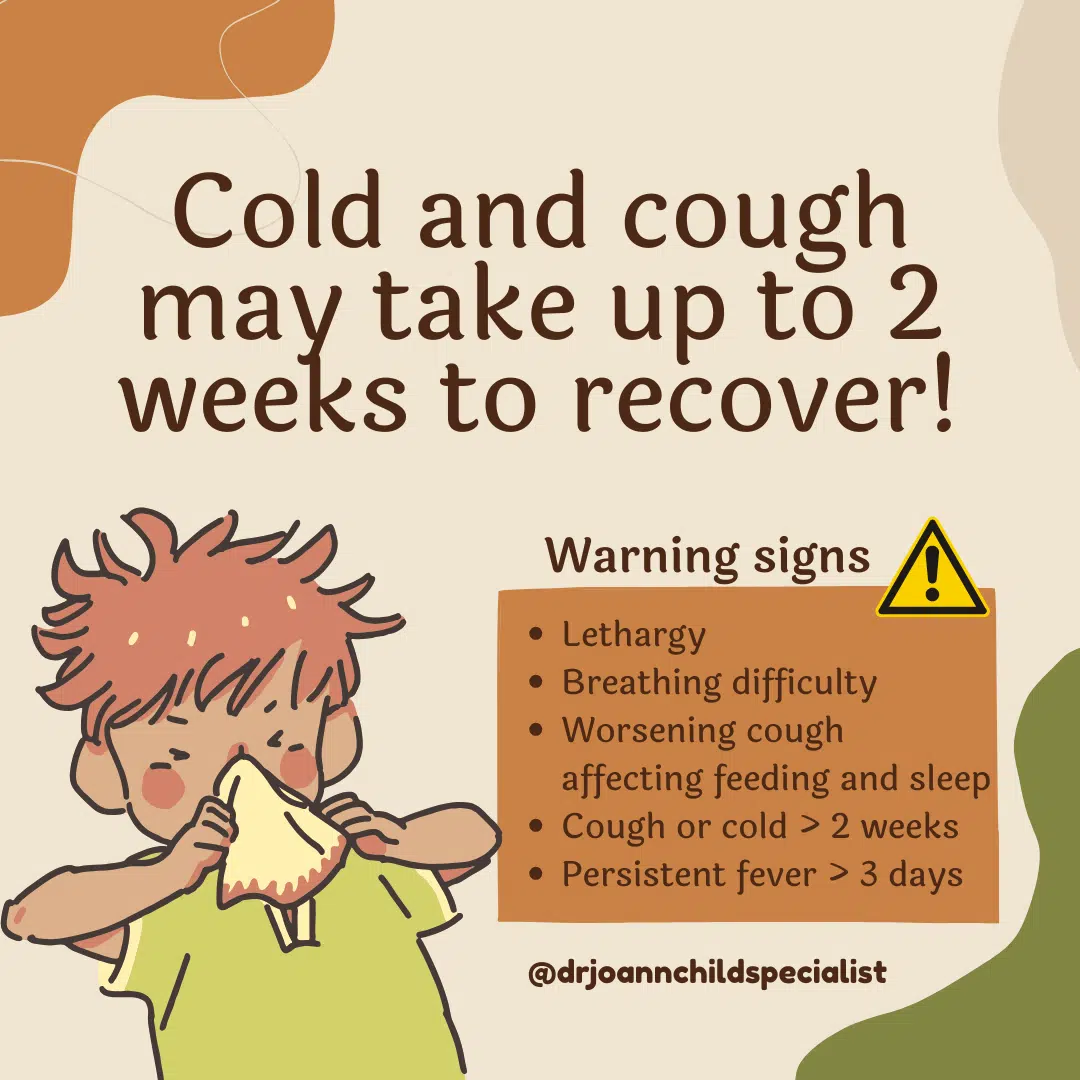
Cold and cough may take up to 2 weeks to recover!
Cough and cold syrups are frequently kept at home and used on and off. While these medicines last longer than antibiotics, they are not meant to be used indefinitely.
Once opened, most cough and cold syrups are safe for about 2 to 6 months. They should be stored in a cool, dry place away from direct sunlight. Parents should discard the medicine immediately if there are changes in colour, smell, or texture.
A syrup that becomes cloudy, unusually thick, or develops an odd smell may be contaminated or chemically altered, making it unsafe for use.
Paracetamol and Ibuprofen Syrups: Familiar but Still Time-Limited 🌡️
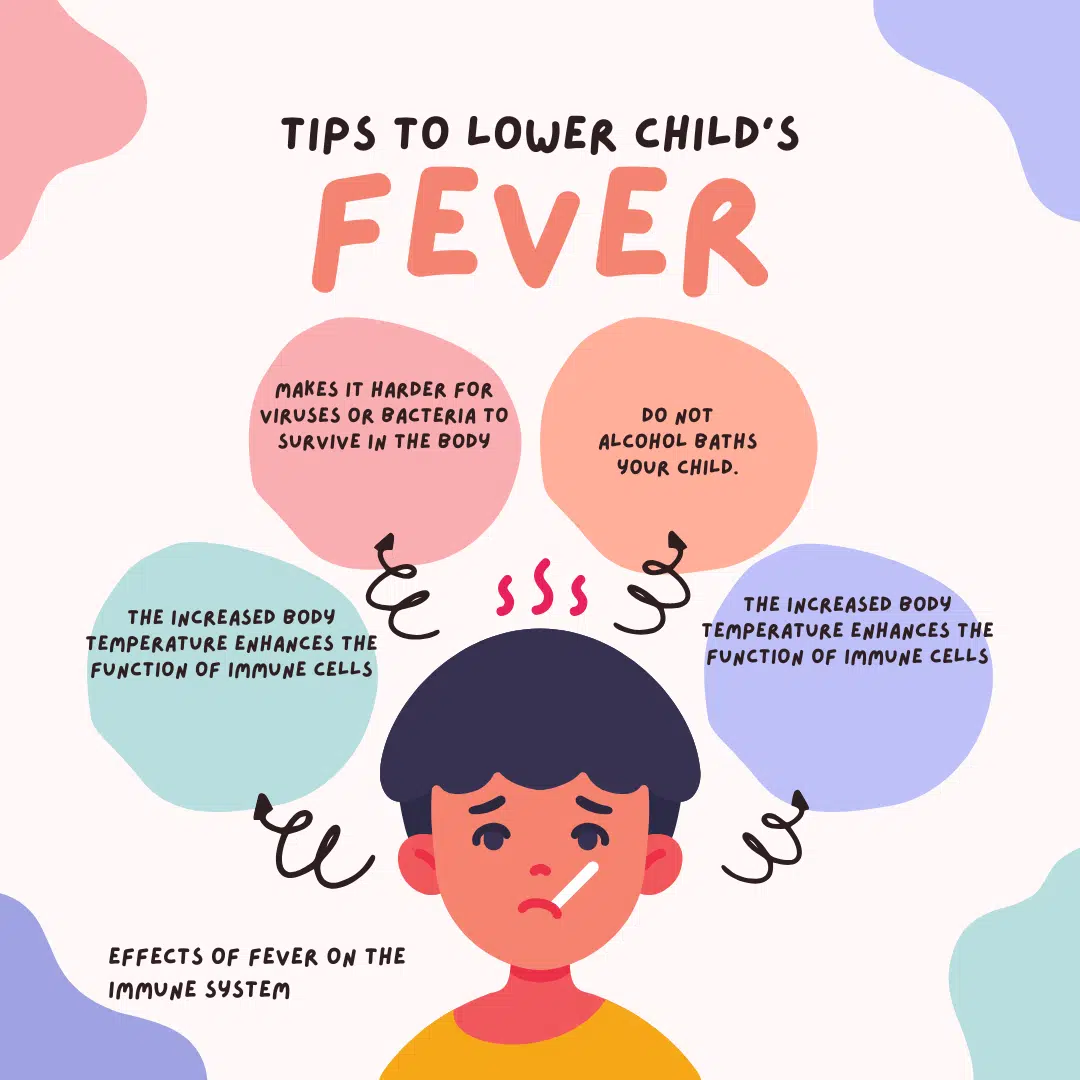
Tips to lower child’s fever
Paracetamol and ibuprofen syrups are among the most commonly used medicines for children. Because they are so familiar, parents may assume they are always safe to use.
After opening, these syrups are generally safe for up to 6 months if stored correctly. However, they should not be used if the liquid becomes cloudy, forms crystals, or if the bottle becomes sticky around the opening.
Using degraded fever medication may result in poor fever control, leading parents to give repeated doses unnecessarily. This increases the risk of overdosing, which can be dangerous. Always check the appearance of the medicine and how long it has been opened before giving it to your child.
Eye and Ear Drops: High Risk of Contamination 👀
Eye and ear drops require extra caution because they are applied directly to very sensitive areas. Once opened, these medicines are easily contaminated.
Most eye and ear drops are safe for only 28 days after opening, regardless of the printed expiry date. Any remaining drops should be discarded after this period.
Using contaminated drops can cause eye infections, worsen ear infections, or lead to irritation and inflammation. A helpful tip is to write the opening date on the bottle to avoid confusion later.
Nebuliser Nebules Are Single-Use Only 💨
Nebuliser medications usually come in small plastic containers called nebules. These are designed strictly for single use.
Once a nebule is opened, it should be used immediately. Any leftover medicine must be discarded and should never be saved for later use. Reusing opened nebules increases the risk of contamination and incorrect dosing, which can be dangerous, especially for children with respiratory conditions.
Why Using Expired Medicine Is Risky ⚠️
Expired or degraded medicines may lose their effectiveness, delay recovery, or cause unexpected side effects. In some cases, parents may feel that a medicine “is not working” when the real issue is that the medicine is no longer active.
Using unsafe medicines can also lead to improper dosing and unnecessary exposure to harmful bacteria or chemicals.
Practical Tips for Parents
To keep your child safe, always write the date of opening on medicine bottles, store medicines according to instructions, and use clean syringes or droppers each time. Avoid sharing medicines between siblings and discard medicines once the safe period after opening has passed.
If you are ever unsure whether a medicine is still safe to use, do not guess.
When in Doubt, Ask Your Healthcare Professional
Your pharmacist or paediatrician is the best person to advise you on medicine safety. If you notice changes in a medicine’s appearance, are unsure how long it has been opened, or have concerns about storage, please check before giving it to your child.
Sometimes, protecting your child’s health means throwing away medicine, even if it feels wasteful. Your child’s safety always comes first.

Dr Joann Rajah