
The Importance of Using Safe Antibiotics for Children
Safe Antibiotics for your child
By Dr Joann
Antibiotics are powerful medicines designed to fight bacterial infections. When used appropriately, they can prevent complications, speed up recovery, and protect your child’s health. However, not all antibiotics are safe, especially if they have been exposed to heat, air, moisture, or light, or if they appear discoloured or expired. Using compromised antibiotics can be ineffective, unsafe, and may contribute to antibiotic resistance.
This article explains why safe and fresh antibiotics are crucial, particularly for children, and offers practical guidance on how to handle them properly.
1. Understanding Altered Antibiotics
Antibiotics can lose their effectiveness if their chemical structure is altered. Factors that contribute to this include:
-
Exposure to heat: Storing antibiotics in warm areas, such as near a window or in a car, can accelerate chemical breakdown.
-
Exposure to moisture: Liquid antibiotics can be contaminated by water or humidity, reducing their potency.
-
Exposure to air or light: Oxygen and sunlight can degrade certain antibiotics, changing their colour, texture, or smell.
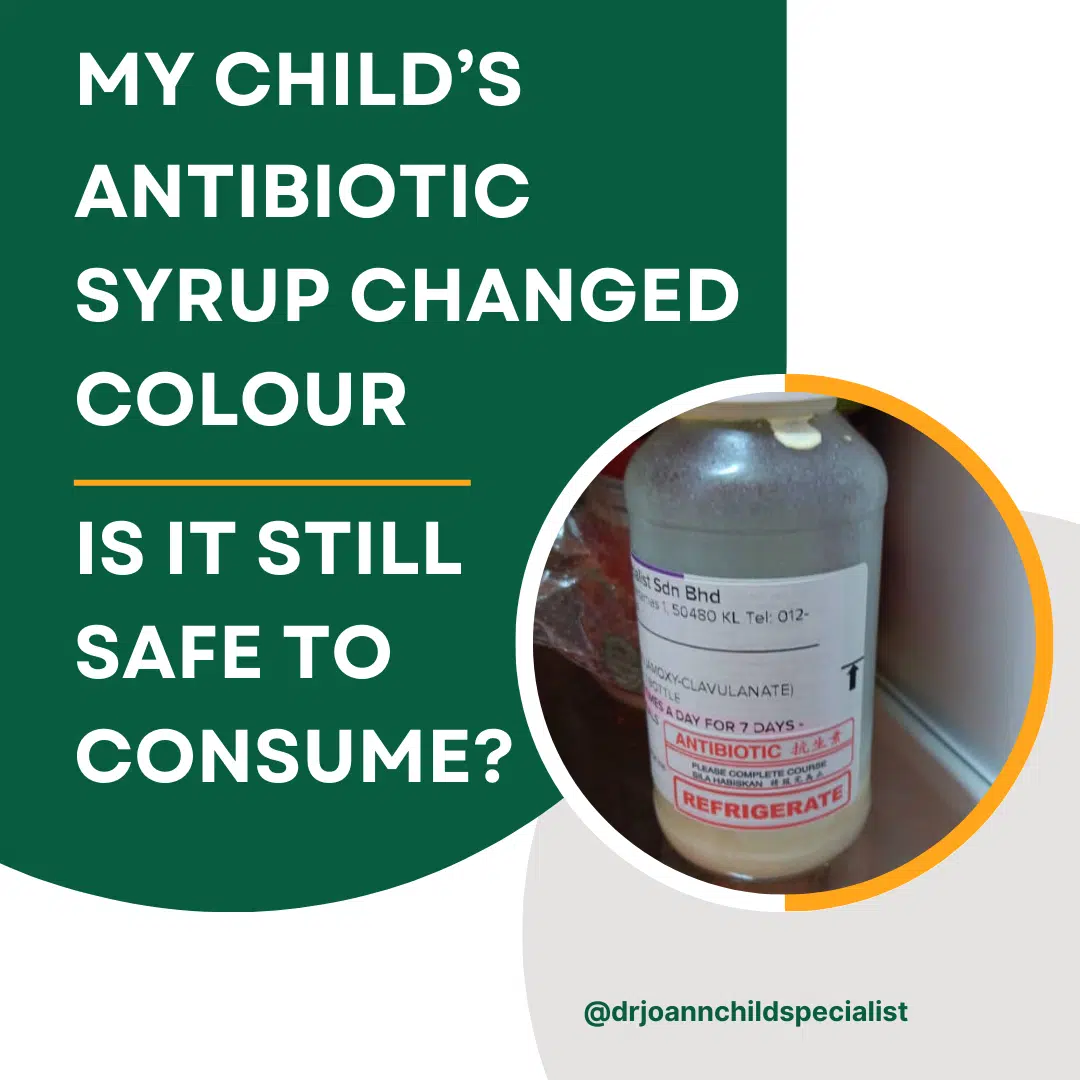
Antibiotics that have changed in colour
Signs of altered antibiotics include:
-
Discolouration: A change in the pill or liquid’s original colour.
-
Odour change: Unusual or sour smell.
-
Texture change: Tablets crumbling easily or liquids separating or thickening.
If any of these signs appear, do not administer the medicine. Always consult your doctor for guidance.
2. The Risks of Using Compromised Antibiotics
Using antibiotics that are altered or expired is dangerous and can cause multiple problems:
-
Reduced Effectiveness: The medicine may no longer kill bacteria effectively, delaying recovery.
-
Unwanted Side Effects: Altered antibiotics may cause nausea, rashes, or other unexpected reactions.
-
Antibiotic Resistance: Bacteria exposed to weak antibiotics may survive and adapt, making future infections harder to treat.
This is especially concerning for children, whose immune systems are still developing. Using compromised antibiotics may lead to prolonged illness or complications that could have been avoided with proper medication.
3. Importance of Antibiotics for Children
Children are more vulnerable to infections and may respond differently to medicines compared to adults. For their safety:
-
Follow the prescribed course fully: Stopping early, even if the child feels better, can allow bacteria to survive and develop resistance.
-
Proper storage: Keep antibiotics in cool, dry, and dark places unless otherwise instructed.
Fresh antibiotics ensure your child receives the full strength of the medicine, maximizing recovery while minimizing risks.
4. Proper Handling and Storage
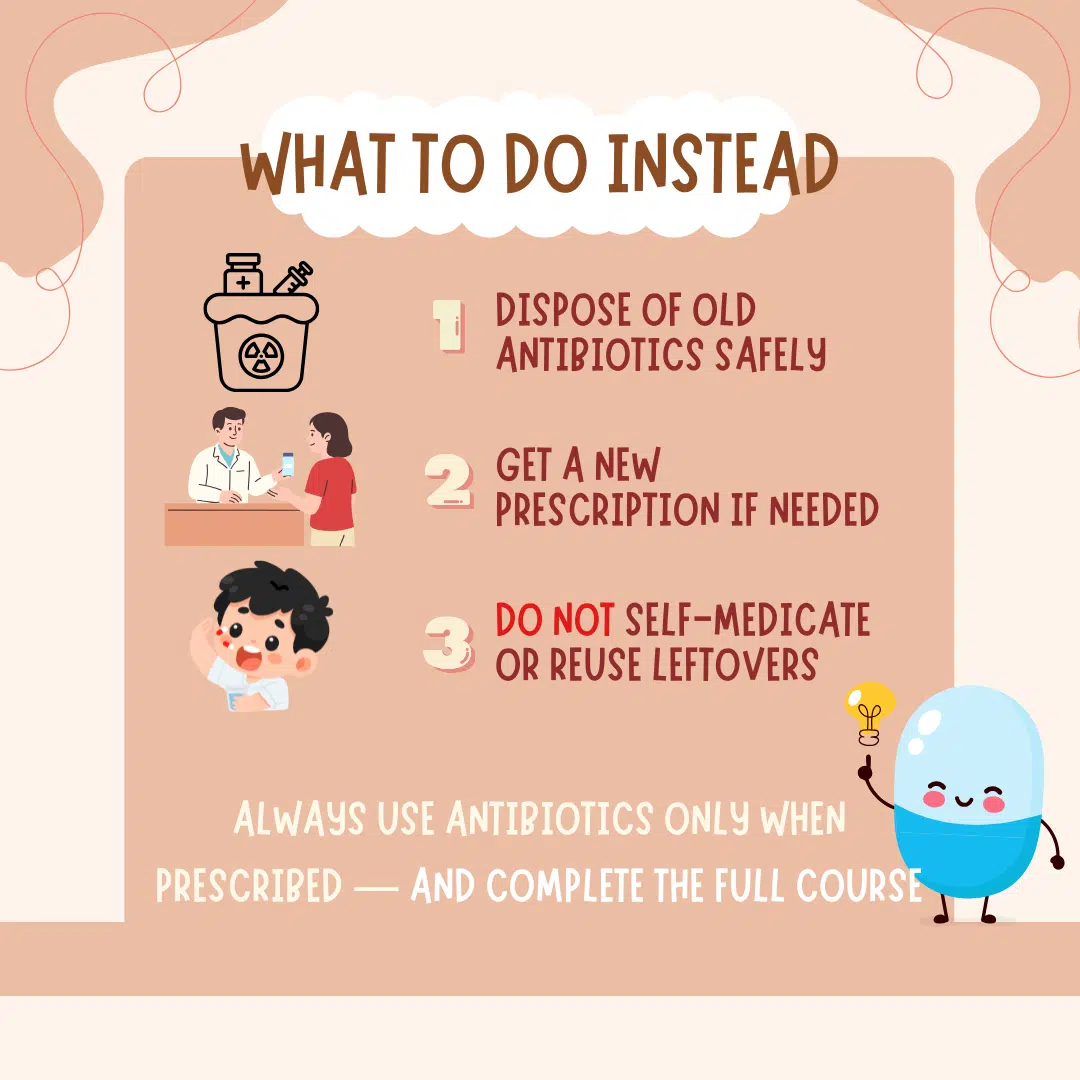
What to do if the antibiotics’ color changes?
To maintain antibiotic safety:
-
Check expiry dates: Never use expired medicine.
-
Store correctly: Refrigeration is needed for some liquid formulations.
-
Avoid contamination: Use clean spoons or droppers to measure liquids and avoid touching the medication directly.
Proper storage not only preserves potency but also reduces the risk of side effects and accidental ingestion by children.
5. Safe Disposal of Old or Altered Antibiotics
Never keep antibiotics that look different, smell odd, or have passed their expiry date. Improper disposal can harm others or the environment. Safe methods include:
-
Return the medication to a pharmacy for proper disposal.
-
Follow local guidelines for disposing of medicines.
Do not flush antibiotics down the toilet or throw them in the trash without proper precautions.
6. Key Takeaways for Parents
-

Q&A of antibiotics
Only use antibiotics prescribed by a qualified doctor.
-
Check the medicine’s appearance, smell, and expiry date before giving it to your child.
-
Complete the full course, even if symptoms improve.
-
Store antibiotics as instructed, away from heat, moisture, and sunlight.
-
Dispose of unused or altered antibiotics safely.
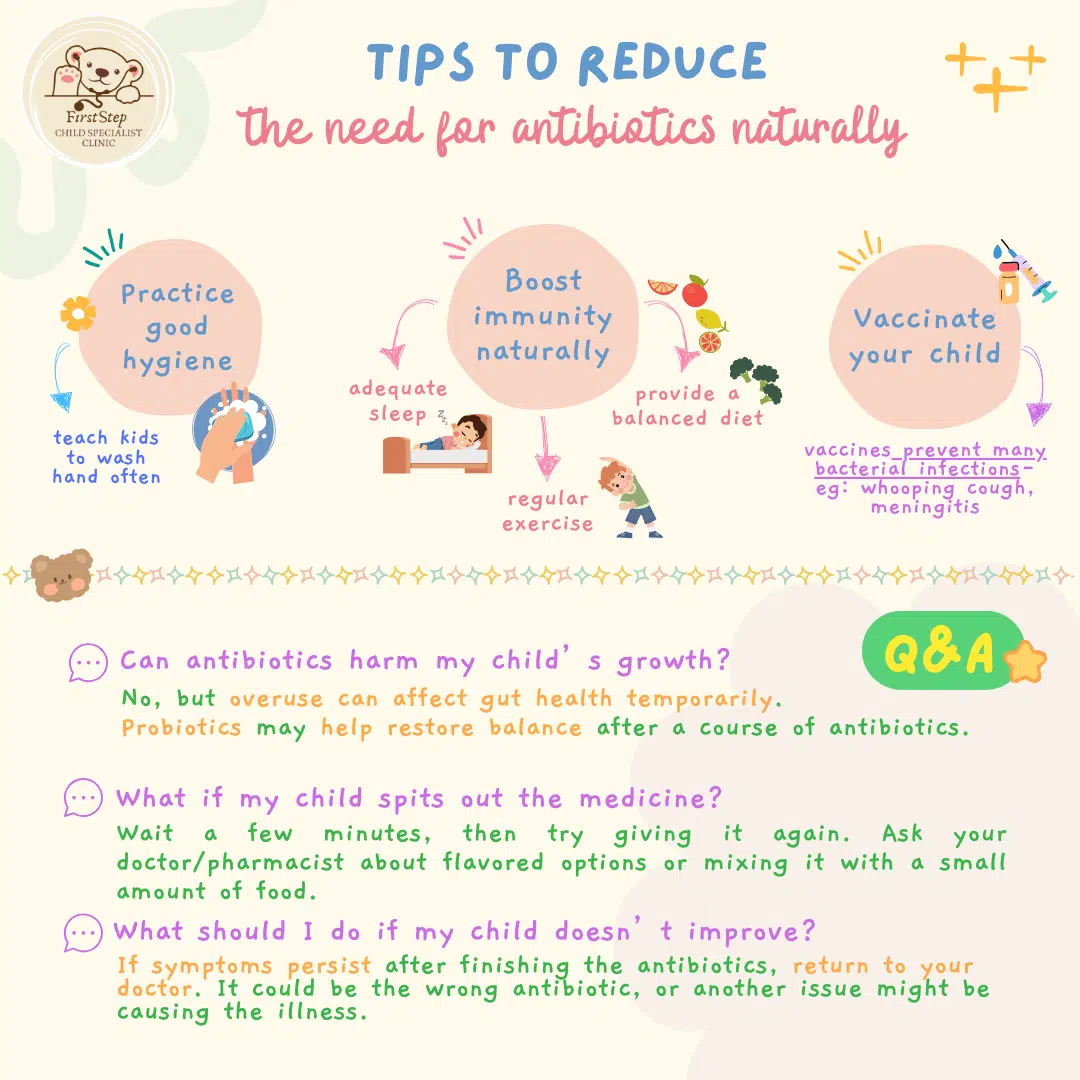
By following these steps, parents can protect their children from ineffective treatment, side effects, and antibiotic resistance, ensuring better health outcomes.
Conclusion
Antibiotics are vital tools in protecting children’s health, but their effectiveness depends on using safe, fresh, and properly stored medications. Any alteration in appearance, smell, or texture is a warning sign. Parents must stay vigilant and consult their doctor if unsure. Safe antibiotic practices today prevent serious health issues tomorrow.
❤️ For children, the safest approach is always to use freshly prescribed antibiotics and complete the full course as instructed by a healthcare professional.

Dr Joann Rajah