
Breastfeeding Is Never “Empty”
Breastfeeding
By Dr Charlotte
It is a concern for new mothers—“Doctor, my breast feels empty… is my baby still getting anything?” This worry is incredibly common, especially in the early days and weeks of breastfeeding when everything still feels new, uncertain, and sometimes overwhelming.
Let me reassure you gently but clearly: breastfeeding is never empty.
Even when your breasts feel soft, even when you cannot see or measure what your baby is taking in, your body is still working in remarkable ways to nourish, protect, and support your child. Breastfeeding is far more than just the transfer of milk—it is a dynamic, living process that adapts continuously to your baby’s needs.
Let’s explore what is truly happening during breastfeeding, and why every latch matters more than you may realize.
The Power of Colostrum: Small Drops, Big Impact

Colostrum vs other milk in breastfeeding
In the first few days after birth, your body produces colostrum—a thick, yellowish fluid often referred to as “liquid gold.” Many mothers worry because the volume seems so small. But this is by design.
Your newborn’s stomach is tiny—about the size of a cherry on day one. They do not need large amounts of milk yet. What they need is concentrated, protective nutrition, and that is exactly what colostrum provides.
Colostrum is rich in:
- Antibodies that help fight infections
- Immune cells that protect against illness
- Growth factors that support gut development
- Proteins and nutrients tailored for early life
Even a few drops are incredibly powerful. So when you feel like “nothing is coming out,” remember—what your baby is receiving is not just milk, but a carefully designed first vaccine and immune shield.
Milk Supply: A Responsive System, Not a Storage Tank
One of the biggest misconceptions about breastfeeding is that breasts must feel “full” to produce milk. In reality, your breasts are not storage containers—they are active glands that produce milk continuously.
Milk production works on a supply-and-demand basis:
- The more your baby latches and feeds, the more your body is stimulated to produce milk
- When your baby sucks, hormones like prolactin and oxytocin are released
- These hormones signal your body to make and release milk
As breastfeeding becomes established, many mothers notice their breasts feel softer or less “engorged.” This does not mean supply has decreased. It simply means your body has adjusted efficiently to your baby’s needs.
A “soft” breast is often a sign that your body and baby are working in harmony.
Breastfeeding Beyond Nutrition
While nutrition is important, breastfeeding offers benefits that go far beyond calories and hydration.
1. Oral and Facial Development
Each time your baby latches, they are engaging in a complex activity that strengthens their jaw, tongue, and facial muscles. These movements:
- Support proper oral development
- Lay the foundation for speech
- Help coordinate sucking, swallowing, and breathing
This coordination is essential not only for feeding but also for long-term developmental milestones.
2. Breathing and Airway Support
Breastfeeding encourages a natural rhythm between breathing and swallowing. This helps:
- Improve airway stability
- Support healthy respiratory patterns
- Reduce the risk of certain breathing difficulties
These subtle benefits are often overlooked, but they play an important role in your baby’s early development.
Breastfeeding as Comfort and Regulation
One of the most beautiful—and sometimes underestimated—aspects of breastfeeding is the emotional and physiological comfort it provides.
Skin-to-Skin Connection
When you hold your baby close during feeding, their body responds in remarkable ways:
- Their temperature becomes more stable
- Their heart rate regulates
- Their breathing becomes more consistent
Your body acts as a natural regulator for your baby, especially in the early weeks of life.
Hormonal Benefits
Breastfeeding triggers the release of oxytocin, often called the “love hormone,” in both mother and baby. This hormone:
- Promotes bonding and attachment
- Reduces stress and anxiety
- Creates a sense of calm and security
For your baby, breastfeeding is not just about hunger—it is about feeling safe, soothed, and connected.
Cluster Feeding and the “Empty” Feeling
Many mothers become concerned during periods of cluster feeding—when babies feed very frequently, sometimes every hour or even more often.
This can make it feel like:
- Your milk is not enough
- Your breasts are “empty.”
- Your baby is still hungry despite feeding
But cluster feeding is completely normal. It often occurs:
- During growth spurts
- In the evenings
- When babies are increasing their milk supply
Your baby is not feeding frequently because you have “no milk.” They are feeding frequently to stimulate more production and meet their growing needs.
Signs Your Baby Is Getting Enough
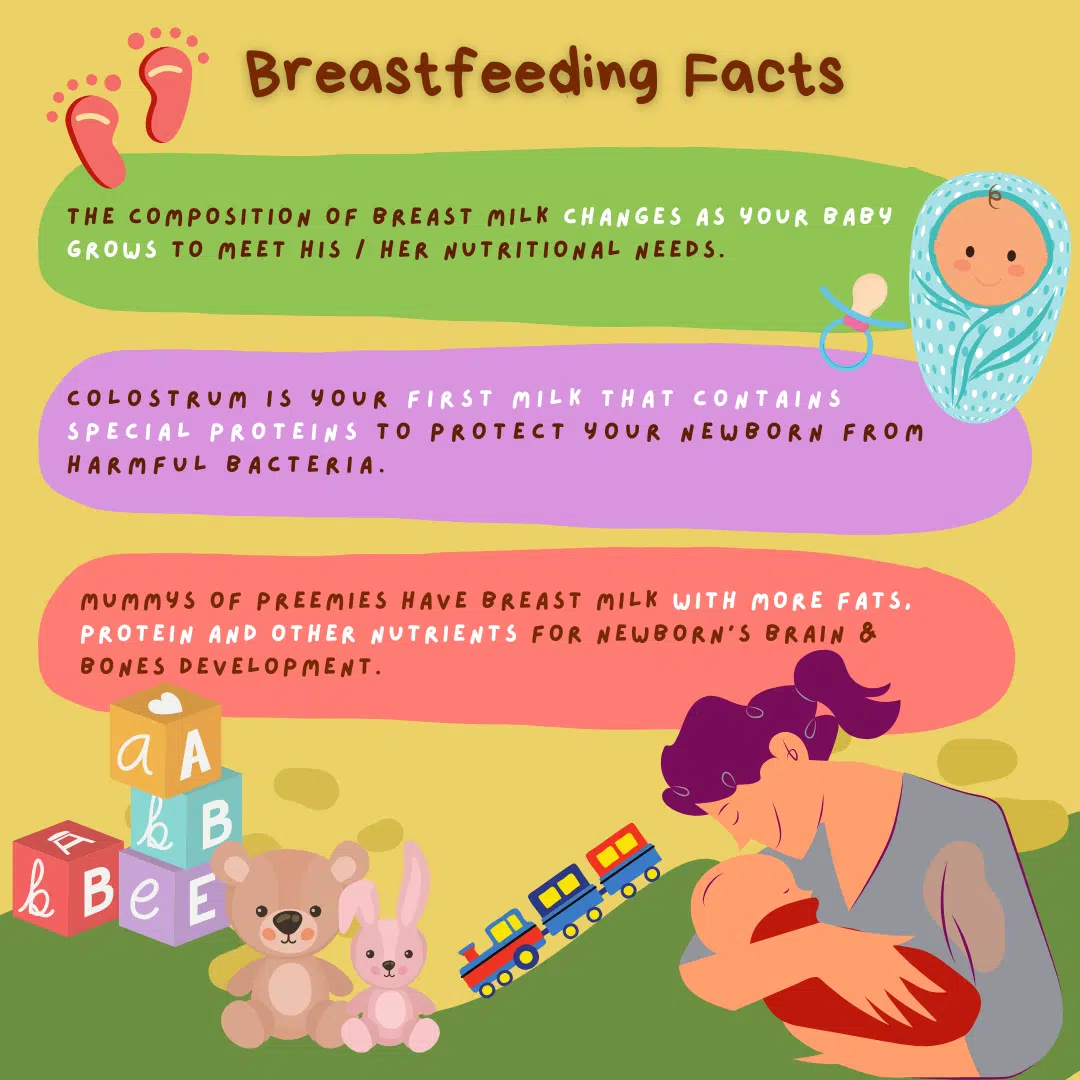
Breastfeeding facts
Instead of relying on how your breasts feel, it is more helpful to observe your baby. Signs that your baby is feeding well include:
- Regular wet diapers (typically 6 or more per day after the first week)
- Steady weight gain
- Active, alert periods when awake
- Audible swallowing during feeds
- A content, relaxed baby after feeding
If these signs are present, it is a strong indication that your baby is receiving enough milk—even if your breasts feel soft or “empty.”
Trusting Your Body
Breastfeeding can sometimes feel uncertain because you cannot measure exactly how much milk your baby is taking in. This lack of visible measurement can lead to doubt.
But your body is designed for this.
Your milk changes:
- From colostrum to transitional milk to mature milk
- In composition throughout the day
- Even within a single feed
It adjusts to:
- Your baby’s age
- Their health needs
- Their growth patterns
This is something no formula can replicate in real time.
When to Seek Support
While breastfeeding is natural, it is not always easy. If you experience:
- Persistent pain during feeding
- Concerns about your baby’s weight gain
- Very few wet diapers
- Difficulty with latching
It is important to seek guidance from a healthcare professional or lactation consultant. Support can make a significant difference in your breastfeeding journey.
A Gentle Reminder to Every Mother
It is easy to doubt yourself, especially when you are tired, healing, and adjusting to life with a newborn. But please remember this:
When your baby latches onto you, they are not just receiving milk.
They are receiving:
- Protection through antibodies
- Support for their developing body
- Comfort and emotional security
- A deep, irreplaceable bond
Even when it feels like there is “nothing there,” your body is still giving so much.
Final Thoughts
Breastfeeding is not defined by how full your breasts feel or how much milk you can see. It is a living, responsive process that continues to provide value with every feed.
So the next time you wonder if your breast is “empty,” take a moment to reframe that thought.
You are not empty.
You are providing exactly what your baby needs—often in ways that cannot be seen, measured, or easily understood.
You are not just feeding your baby.
You are nurturing, protecting, and guiding their growth in ways that will shape their health and development for years to come.
And that is never empty. 🤍

Dr Charlotte Gan is our resident doctor in Firststep Child Specialist Clinic in Ara Damansara