Tuberculosis (TB) & Children
Tuberculosis (TB)
By Dr. Soo Hui Fang
Introduction
Tuberculosis (TB), medically known as Tuberculosis, remains one of the world’s most significant infectious diseases, affecting millions of people every year. While many people associate TB with adults, children are also at risk—often in ways that are less obvious but potentially more dangerous.
As a parent, understanding how TB affects children, how it spreads, and how it can be prevented is essential in protecting your family. This article aims to provide a clear, practical, and evidence-based overview of TB in children, including key warning signs, prevention strategies, and the importance of early screening.
Why Are Children More Vulnerable to TB?
Children are not simply “small adults.” Their immune systems are still developing, which makes them less capable of fighting infections effectively. When exposed to TB bacteria, children are more likely than adults to develop active disease rather than just carrying the infection silently.
In particular, young children—especially those under five years old—are at higher risk of developing severe forms of TB. These include:
- TB meningitis (infection of the brain lining)
- Miliary TB (widespread infection throughout the body)
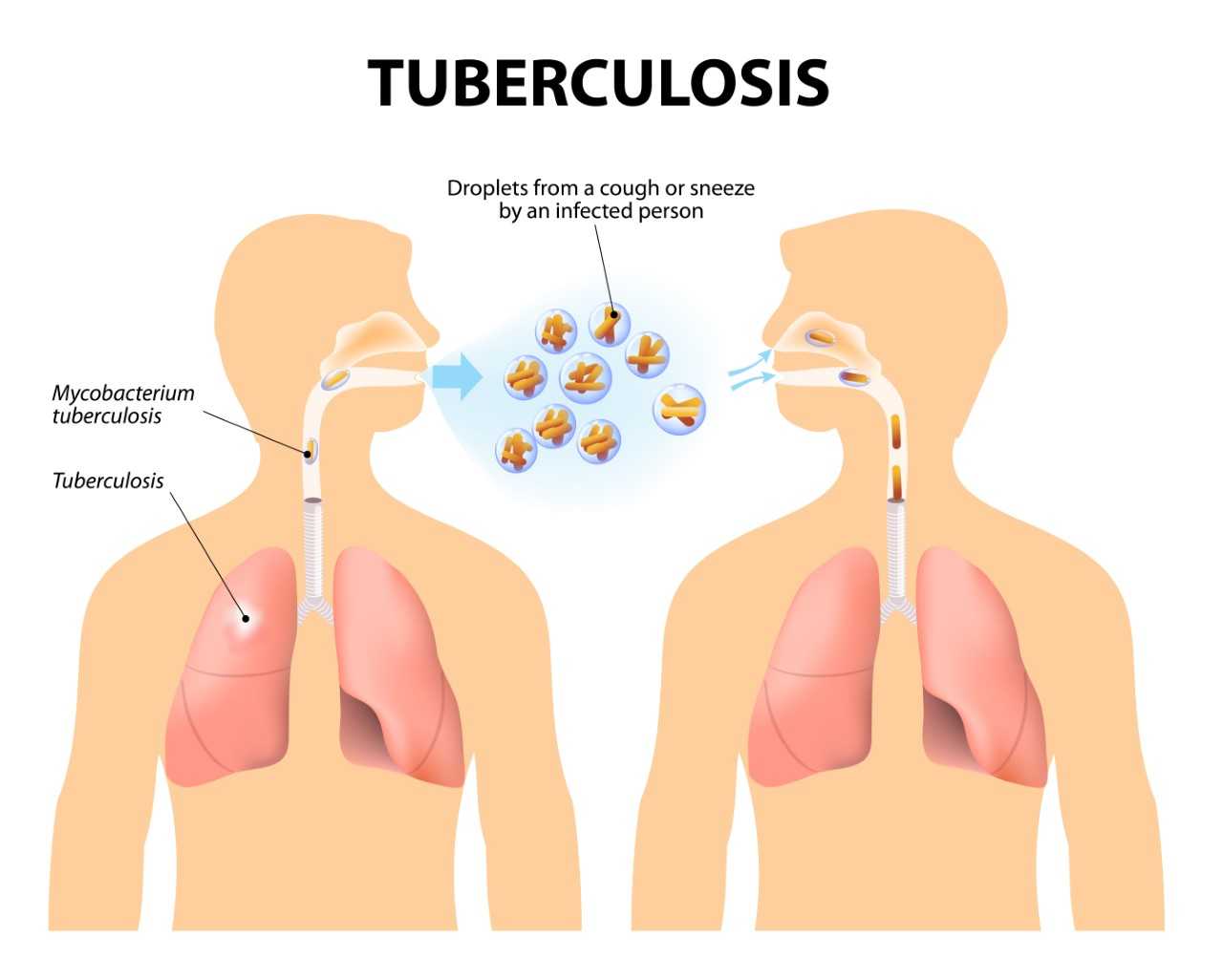
How does Tuberculosis (TB) spread?
These forms can be life-threatening if not detected and treated early.
Another important point is that children rarely spread TB to others. Instead, they are usually infected by adults in their immediate environment, such as:
- Parents
- Grandparents
- Caregivers
- Household members
This means that TB in children is often a sign of an undiagnosed or untreated TB case within the household.
How Does TB Spread?
TB spreads through the air when a person with active lung TB releases bacteria by coughing, sneezing, talking, or even singing. However, it is important to understand that TB is not easily transmitted through casual contact.
Transmission usually requires:
- Prolonged exposure
- Close contact
- Poor ventilation
Common High-Risk Situations
- Living in the same household
- Sharing a bedroom
- Spending long hours indoors together
Low-Risk Situations
- Brief social interactions
- Outdoor encounters
- Well-ventilated environments
This distinction is important because many parents worry unnecessarily about casual exposure. In reality, TB transmission typically occurs over time, not from a single short encounter.
The Role of Ventilation
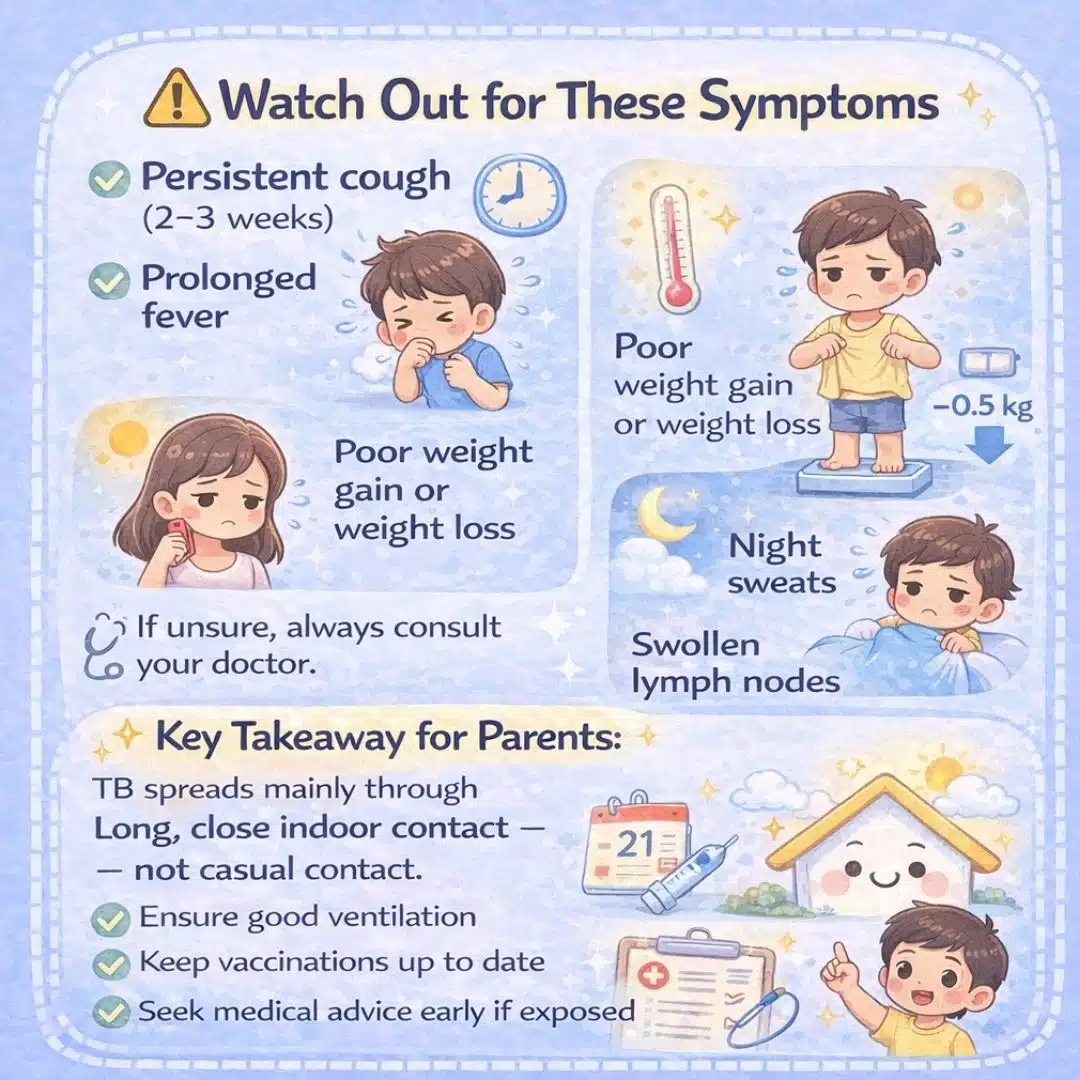
Watch out for these symptoms in your child for Tuberculosis (TB)
One of the simplest yet most effective ways to reduce TB transmission is improving ventilation. TB bacteria can remain suspended in the air, especially in enclosed spaces. Good airflow helps dilute and remove these bacteria from the environment.
Practical Steps at Home
- Open windows regularly
- Use fans to improve air circulation
- Create cross-ventilation (open windows on opposite sides)
- Avoid overcrowded indoor spaces
Studies have shown that proper ventilation can reduce the risk of TB transmission by more than 50%. This highlights how small, everyday actions can significantly improve your child’s safety.
The Importance of the BCG Vaccine
The Bacillus Calmette-Guérin (BCG) vaccine is part of routine childhood immunisation in many countries, including Malaysia.
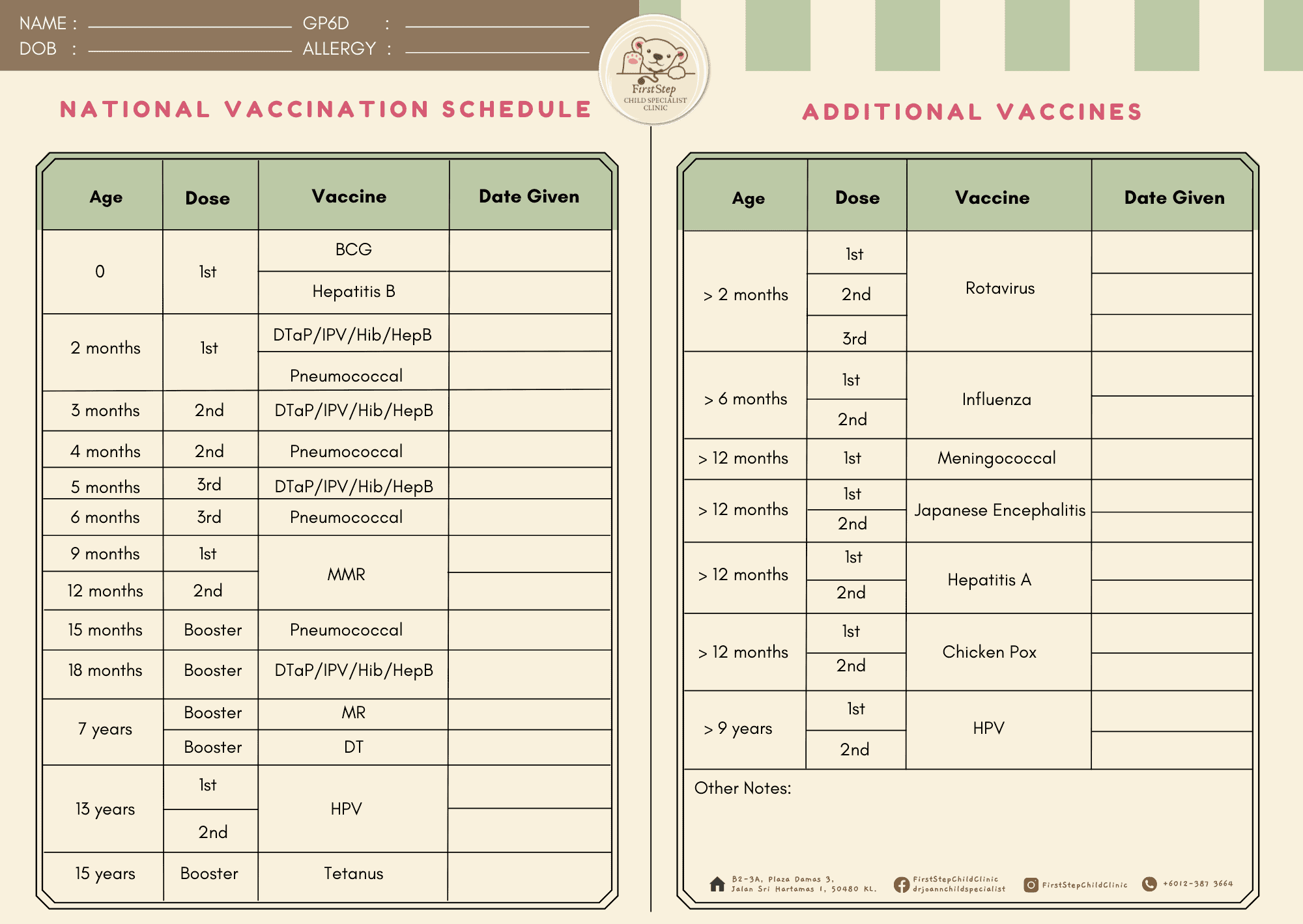
Our vaccine schedule follows the Malaysian childhood immunisation guideline under the National Immunisation Programme (NIP) by the Ministry of Health Malaysia
What the BCG Vaccine Does
- Protects against severe forms of TB in children
- Reduces the risk of TB meningitis and miliary TB
What It Does Not Do
- It does not completely prevent TB infection
- It does not guarantee lifelong immunity
Despite these limitations, the BCG vaccine is extremely important because it protects children from the most dangerous complications of TB. Parents should ensure their children receive this vaccine according to national immunisation schedules.
Why Early Screening Matters
Children exposed to TB may not show symptoms immediately. In fact, many children with TB appear well in the early stages.
This is why early screening is crucial, especially if:
- A household member has been diagnosed with TB
- There has been prolonged close contact with someone who has TB
Benefits of Early Screening
- Detects infection before symptoms appear
- Allows preventive treatment
- Reduces risk of severe disease
- Prevents complications
Screening may involve:
- Medical history and physical examination
- Tuberculin skin test or blood test
- Chest X-ray if needed
Early intervention can make a significant difference in outcomes.
Signs and Symptoms to Watch For
TB in children can be subtle and easily mistaken for other common illnesses. Parents should be aware of the following warning signs:
- Persistent cough lasting more than 2–3 weeks
- Prolonged or unexplained fever
- Poor weight gain or weight loss
- Night sweats
- Swollen lymph nodes, especially in the neck
If your child shows any of these symptoms—especially with a history of TB exposure—it is important to seek medical evaluation promptly.
Key Takeaways for Parents
- TB spreads mainly through prolonged, close indoor contact
- Children are more vulnerable due to weaker immune systems
- Most infections in children come from household contacts
- Good ventilation significantly reduces risk
- The BCG vaccine protects against severe TB forms
- Early screening is essential after exposure
- Recognising symptoms early can save lives
Taking these steps can help protect your child and reduce the risk of TB within your household.
Conclusion
Tuberculosis is preventable and treatable, but it requires awareness, vigilance, and timely action—especially when it comes to children. By understanding how TB spreads, recognising early symptoms, ensuring vaccination, and maintaining a healthy living environment, parents can play a powerful role in safeguarding their children’s health.
Saving and sharing accurate information about TB can make a real difference—not just for your family, but for your community as well.

Dr Soo Hui Fang