Nail Biting
Nail Biting: More Than Just a Bad Habit
By Dr Joann
Many parents have caught their child biting their nails while watching TV, doing homework, or even daydreaming. It may seem like a harmless habit, but frequent nail biting can affect more than just the appearance of your child’s nails.
Our hands come into contact with countless germs every day. Children touch toys, books, playground equipment, classroom desks, and shared surfaces, picking up bacteria, viruses, dirt, and even parasite eggs. When they bite their nails, these germs can easily enter the mouth, increasing the risk of infections.
Why is nail biting a concern?
While not every child who bites their nails will become ill, chronic nail biting may increase the risk of:
- Recurrent viral infections, such as the common cold
- Stomach infections caused by germs entering the digestive system
- Worm infestations from accidentally swallowing parasite eggs
- Skin infections around the nails due to damaged skin
- Dental problems, including chipped or worn front teeth
- Worsening eczema around the fingers, especially if the skin is already inflamed
Repeated nail biting can also damage the skin around the nails, making it easier for bacteria to cause painful infections.
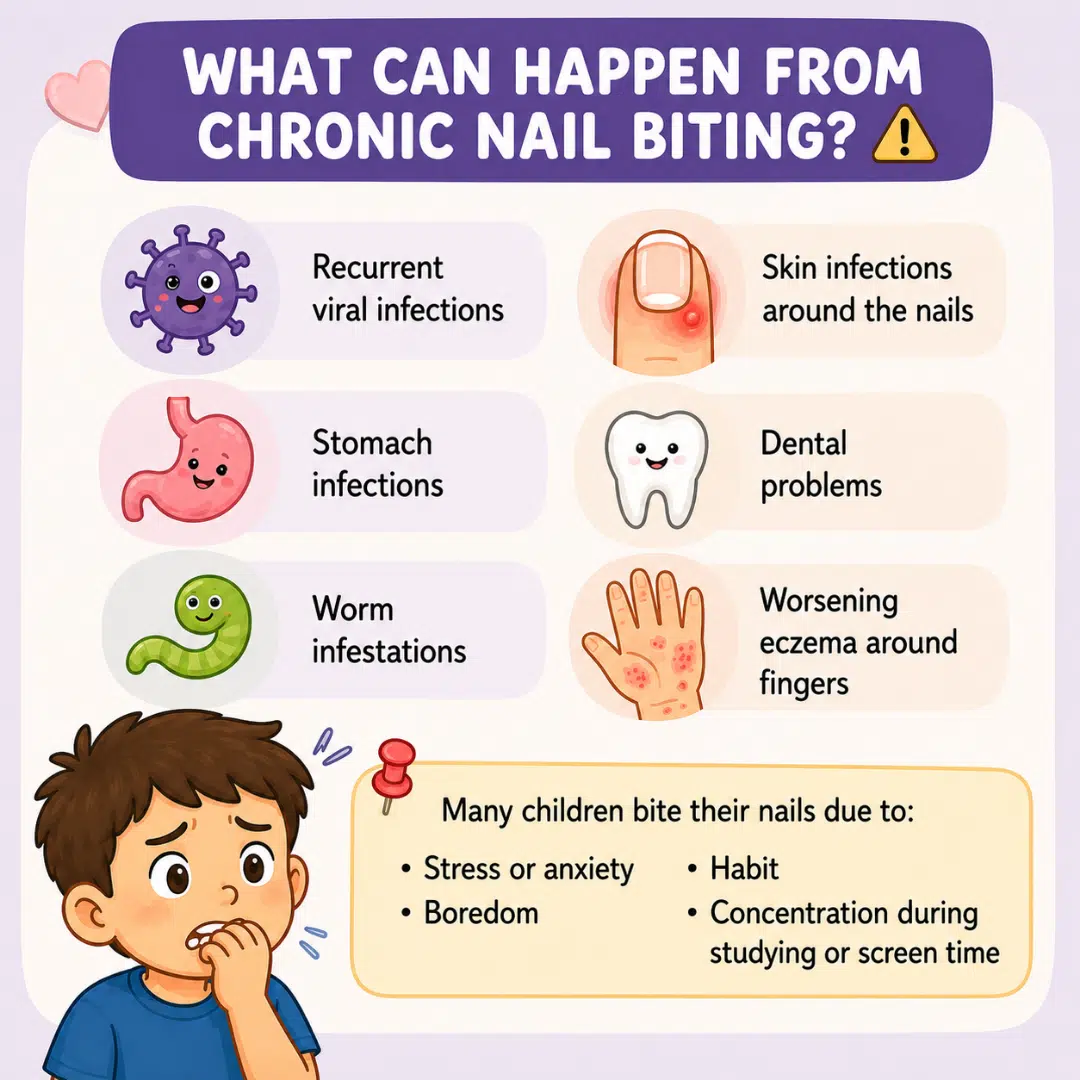
What can happen from nail biting
Why do children bite their nails?
Nail biting, also known as onychophagia, is very common in children. It is often an unconscious habit rather than deliberate misbehaviour.
Common triggers include:
- Stress or anxiety
- Boredom
- Tiredness
- Concentrating on a task
- Simply doing it out of habit
Sometimes, nail biting is a child’s way of coping with emotions they may not know how to express.
How can parents help?
The good news is that most children can gradually stop nail biting with patience and encouragement.
Here are a few practical tips:
- Keep your child’s nails short and clean.
- Encourage regular handwashing to reduce the spread of germs.
- Observe when nail biting happens and identify possible triggers.
- Offer healthier alternatives, such as a stress ball or fidget toy.
- Praise small improvements instead of focusing on setbacks.
- Avoid scolding or punishing, as this may increase stress and make the habit worse.
Positive reinforcement is usually much more effective than repeated reminders to “stop biting your nails.”
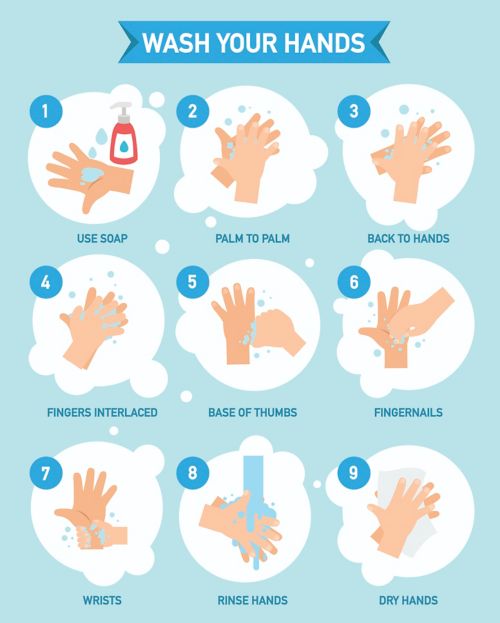
How to wash hands?
When should you seek medical advice?
Occasional nail biting is common and often improves with age. However, it’s worth seeing your child’s doctor if:
- The skin around the nails becomes swollen, painful, or infected.
- The nails are severely damaged or bleeding.
- The habit is becoming more frequent or difficult to stop.
- Nail biting is accompanied by signs of significant stress, anxiety, or other behavioural changes.
A doctor can assess whether treatment is needed for any infections and help identify if there may be underlying emotional concerns.
The takeaway
Nail biting is more than just a cosmetic habit. It can increase the risk of infections, affect dental and skin health, and sometimes be a sign that a child is feeling stressed or anxious.
Rather than seeing it as bad behaviour, try to understand what may be triggering the habit. With patience, positive reinforcement, and healthy coping strategies, most children can overcome nail biting over time.
Small habits may seem insignificant, but addressing them early can make a meaningful difference to your child’s overall health and well-being.

Your trusted consultant pediatrician