Haze and Your Child
The Haze Is Getting Worse
By Dr Joann
Haze is more than just “bad air”. The fine particles in the air can irritate your child’s eyes, nose, skin and airways. Some children may be more sensitive, especially those with asthma, allergies, eczema or other underlying conditions.
The good news is that there are simple steps you can take to reduce their exposure.
👀 Irritated or watery eyes?

Irritated and watery eyes
Haze can cause redness, watering, itching, or a gritty feeling in the eyes.
You can gently rinse the eyes with clean water or use preservative-free artificial tears if needed. Encourage your child not to rub their eyes, as this can make the irritation worse.
👃 Blocked or irritated nose?
If your child has a stuffy, runny or irritated nose, normal saline nasal spray or drops can help clear away irritants and mucus.
🚿 After spending time outdoors
After coming indoors, wash your child’s face and hands. If possible, have them shower and change into clean clothes to remove particles that may have settled on their skin and hair.
🧴 Take care of sensitive skin
Haze and dry air can aggravate sensitive or eczema-prone skin.
Apply a fragrance-free moisturiser regularly, especially after bathing, to help maintain the skin barrier.
😷 What about masks?
For children aged 2 years and above, a well-fitting particulate-filtering mask or respirator can provide better protection from fine particles than a loose-fitting surgical or cloth mask.
Children under 2 years should not wear masks because of the risk of breathing difficulty and suffocation.
🏠 On days when the haze is bad
Try to reduce outdoor activities and keep windows and doors closed when outdoor air quality is poor.
If available, a suitable HEPA air purifier can help reduce fine particles indoors. Remember to maintain and replace the filters according to the manufacturer’s instructions.
💊 If your child has asthma
Continue your child’s prescribed preventer medication as advised by their doctor, and make sure their reliever inhaler is readily available.
Do not wait until symptoms become severe before seeking help.
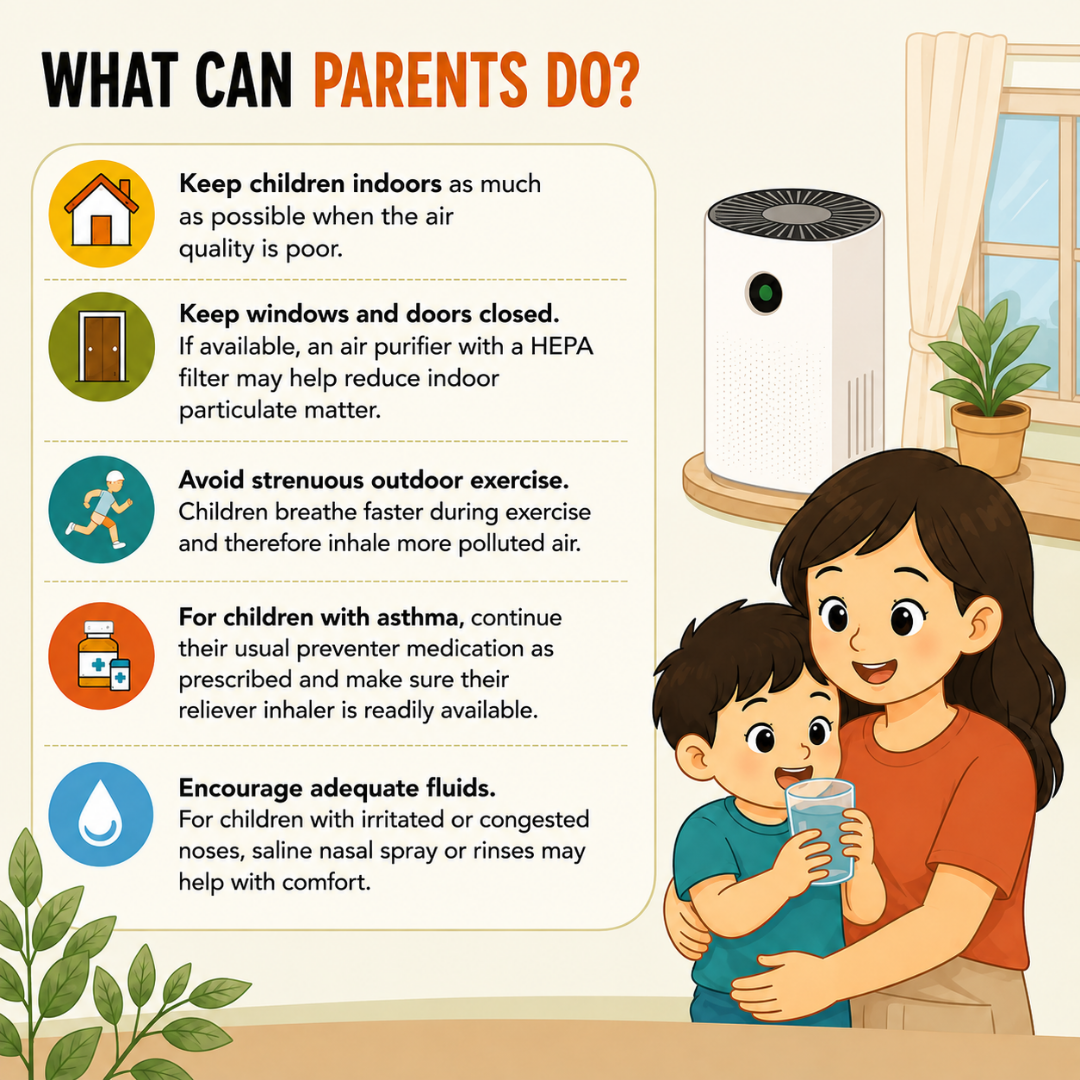
What can parents do during this haze period?
⚠️ Most importantly, watch your child — not just the haze reading
Air quality readings are useful, but your child’s symptoms matter too.
Seek medical attention if your child develops:
• Persistent or worsening cough
• Wheezing
• Fast or difficult breathing
• Chest tightness
• Unusual tiredness or reduced activity
• Difficulty speaking, eating or drinking because of breathing difficulty
Haze affects children differently. If your child has asthma, allergies, eczema or another underlying condition and you are unsure how to manage their symptoms during haze episodes, speak to your paediatrician.
A little extra care during hazy days can go a long way in keeping our little ones comfortable and breathing easier.

Dr Joann Rajah