Viral Croup
Is Viral Croup Dangerous?
By Dr Soo Hui Fang
One of the most alarming experiences for parents is hearing their child suddenly wake up in the middle of the night with a loud, harsh cough that sounds remarkably like a barking seal. The cough may be accompanied by a hoarse voice or a noisy sound when breathing in, making it seem as though your child is struggling to breathe.
Although this can be frightening, the good news is that viral croup is a common childhood illness and, in most cases, children recover completely with supportive care within 3 to 7 days. Understanding what viral croup is, what causes it, and when to seek medical attention can help parents stay calm and manage the illness safely.
What is Viral Croup?
Viral croup in your child
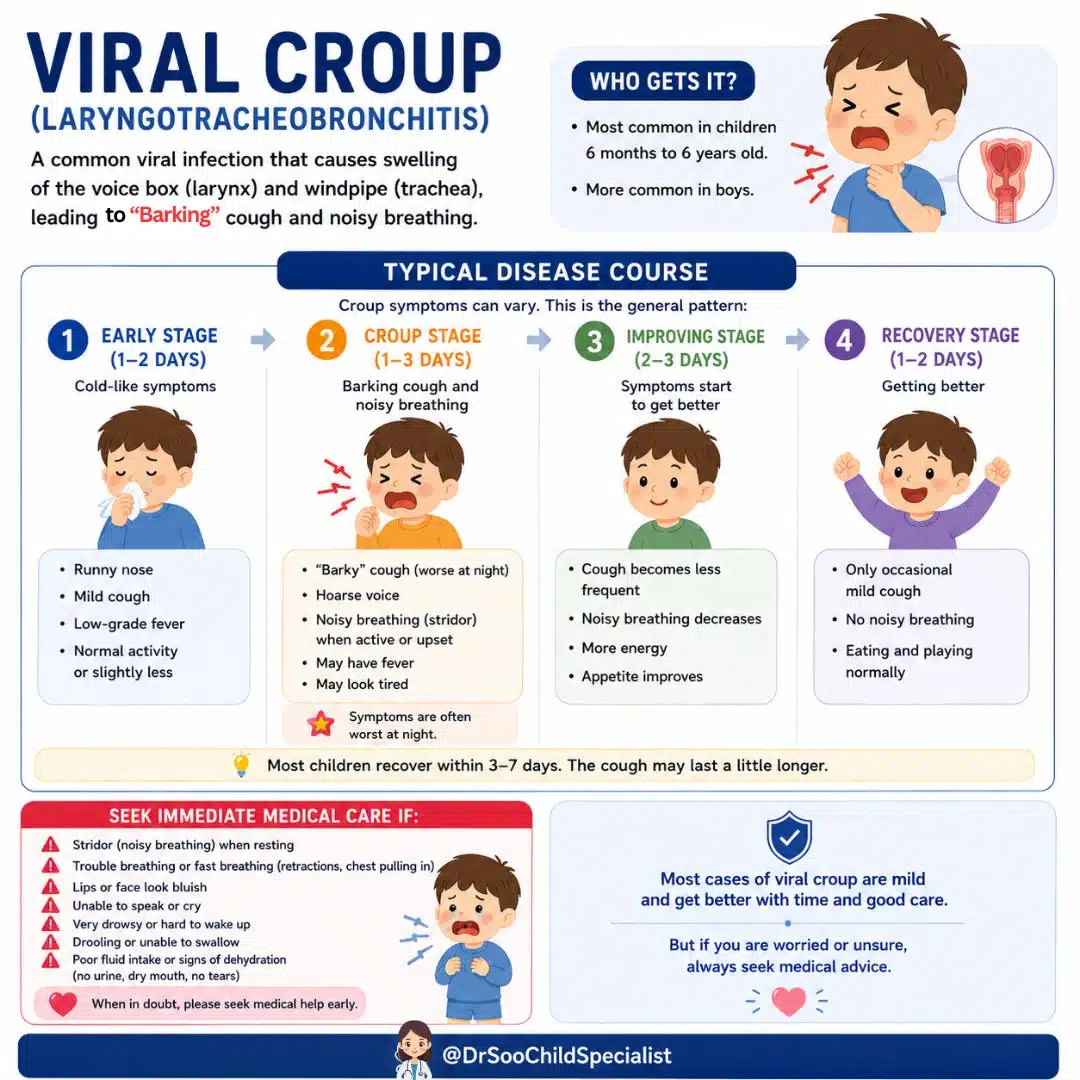
Viral croup is an infection that causes inflammation and swelling of the larynx (voice box), trachea (windpipe), and upper airway. This swelling narrows the airway, making it more difficult for air to pass through. As a result, children develop the characteristic “barking” cough, a hoarse voice, and sometimes a high-pitched, noisy sound when breathing in, known as stridor.
The condition is most commonly caused by viruses, particularly the parainfluenza virus, although influenza, respiratory syncytial virus (RSV), adenovirus, and several other viruses can also cause croup.
Viral croup is most frequently seen in children between 6 months and 3 years of age, although older children can occasionally be affected. Because young children’s airways are naturally smaller, even mild swelling can lead to noticeable symptoms.
What Are the Symptoms?
Viral croup usually begins like an ordinary cold.
Your child may first develop:
- A runny nose

Changing colour of mucus
- Mild fever
- Sore throat
- Cough
- Reduced appetite
After one or two days, the more recognizable symptoms appear, including:
- A distinctive barking or seal-like cough
- Hoarse or raspy voice
- Noisy breathing when inhaling (stridor)
- Mild breathing difficulty, especially when crying or upset
Many children remain playful and active despite the cough, especially if the illness is mild.
How Long Does Viral Croup Last?
For most children, viral croup is a short-lived illness.
The symptoms typically follow this pattern:
- Day 1–2: Cold symptoms begin.
- Night 2–3: Barking cough and noisy breathing are usually at their worst.
- Day 3–5: Symptoms gradually improve.
- Within 3–7 days: Most children recover completely.
Some children may continue to have a mild cough for a little longer, but this generally resolves without any complications.
Caring for Your Child at Home
Most cases of viral croup can be managed safely at home, provided the symptoms remain mild.
Parents can help by:
Keep your child calm
This is one of the most important things you can do.
When children become frightened or cry excessively, they breathe faster and use more effort to breathe. This can make the noisy breathing (stridor) much worse.
Comfort your child, hold them upright if they prefer, and stay close to reassure them.
Encourage fluids
Offer small amounts of water, milk, or oral rehydration fluids frequently to prevent dehydration.
Some children may prefer cool drinks because they soothe an irritated throat.
Manage fever if needed
If your child has a fever or appears uncomfortable, medications such as paracetamol or ibuprofen (for children who are old enough and suitable to take it) may help improve comfort.
Always follow your doctor’s advice or use the correct dose based on your child’s weight.
Allow plenty of rest
Children recover more quickly when they have adequate rest.
There is no need to force eating if appetite is poor, as long as your child continues drinking enough fluids.
When Should You Seek Emergency Care?

Trust your instinct
Some symptoms suggest significant airway narrowing and require immediate medical attention.
Seek emergency care immediately if your child has:
- Noisy breathing (stridor) even while resting calmly
- Difficulty breathing or rapid breathing
- Chest pulling in with each breath (chest retractions)
- Bluish lips, tongue, or face
- Excessive sleepiness or difficulty waking up
- Unable to drink fluids or swallow saliva
- Drooling because they cannot swallow
- Appears exhausted from breathing
These signs indicate that your child may need urgent medical treatment and should not be managed at home.
A Message for Parents
Hearing your child develop a barking cough or noisy breathing can be frightening, especially in the middle of the night. Fortunately, viral croup is usually a self-limiting illness, and most children recover fully within one week.
The key is to remain calm, keep your child comfortable, encourage fluids, and monitor their breathing closely. Remember that crying can make the airway narrowing seem worse, so your calm reassurance can make a real difference.
However, never hesitate to seek medical attention if your child’s breathing becomes difficult, they develop noisy breathing while resting, appear unusually sleepy, or are unable to drink. Early assessment allows us to determine whether simple supportive care is enough or whether treatment is needed.
With careful observation and appropriate care, the vast majority of children recover quickly and return to their usual playful selves within a few days.
Dr Soo Hui Fang