Chickenpox in Children
Chickenpox: When to Seek Medical Care
By Dr. Soo
Recently, we have been seeing more cases of chickenpox among children in the community. While chickenpox is a common childhood illness, many parents may still feel worried when they notice the rash spreading quickly or changing appearance from day to day.
One of the most unique features of chicken pox is that the rash evolves and can look very different throughout the illness. Understanding how the rash changes, what symptoms to expect, and when to seek medical attention can help parents care for their child more confidently during recovery.
What Is Chickenpox?
Chicken pox is a highly contagious viral infection caused by the varicella-zoster virus. It commonly affects children and spreads easily through coughing, sneezing, saliva, or direct contact with the fluid from the blisters.
A child with chickenpox can spread the virus even before the rash becomes obvious. This is why outbreaks often happen quickly in schools, nurseries, and childcare centres.
Although most healthy children recover well, chickenpox can still cause discomfort due to fever, itchiness, poor appetite, and tiredness. Some children may also develop complications, which is why parents should continue monitoring symptoms carefully throughout the illness.
Early Symptoms of Chickenpox
Before the rash appears, children may develop mild symptoms such as:
- Fever
- Tiredness
- Reduced appetite
- Headache
- Sore throat
- General fussiness or irritability
These symptoms may appear one to two days before the typical rash starts.
In younger children, the rash may sometimes be the first noticeable sign.
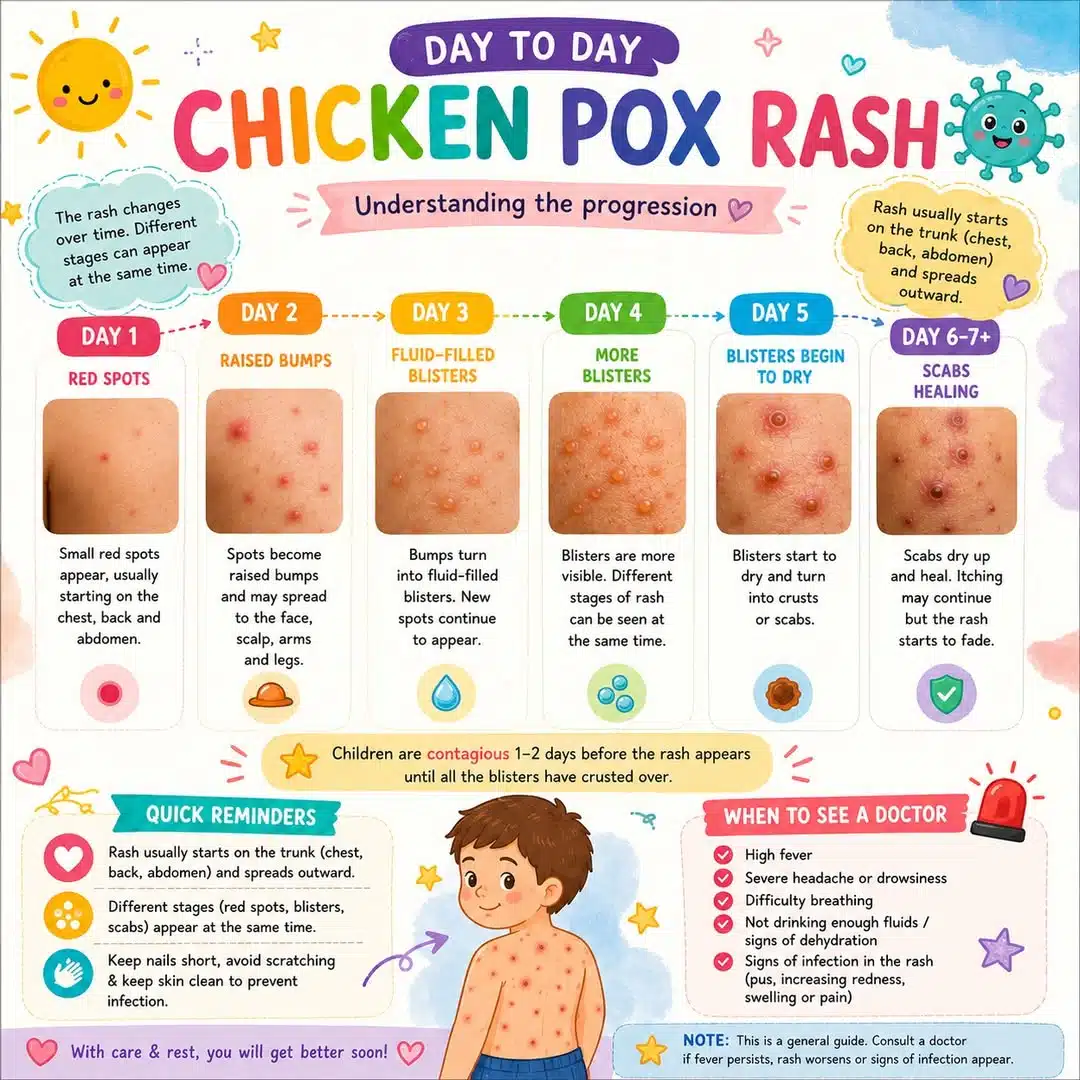
How Does Chickenpox Rash Change Over Time?
One of the most important things parents should know is that the chickenpox rash changes in stages.
The rash usually begins as small red spots, often first appearing over the chest, back, tummy, or face. Over time, these spots transform into fluid-filled blisters before eventually drying and forming scabs.
Interestingly, children with chickenpox often have different stages of the rash present at the same time. This means you may see:
- New red spots appearing
- Fresh blisters forming
- Older blisters drying up
- Scabs already developing
all at once on different parts of the body.
This mixed appearance is a very common clue that helps doctors identify chickenpox.
Stage 1: Small Red Spots
The rash often starts as tiny pink or red spots on the body. These spots may resemble insect bites or heat rash in the beginning.
At this stage, the rash may spread rapidly over several hours to days. Spots can appear on the:
- Chest
- Back
- Tummy
- Face
- Scalp
- Arms and legs
Some children may also develop spots inside the mouth, around the eyes, or in the diaper area.
Stage 2: Water-Filled Blisters
After the red spots appear, they usually become itchy, fluid-filled blisters.
These blisters are one of the classic signs of chickenpox. Parents often describe them as “small bubbles” or “water droplets” on the skin.
The itchiness can become quite uncomfortable during this stage, especially at night. Younger children may scratch frequently, which can sometimes lead to skin infection if the blisters break open excessively.
New blisters may continue appearing for several days.
Stage 3: Drying and Scabbing
Eventually, the blisters begin to dry, crust over, and form scabs.
This stage is part of the normal healing process. The scabs will gradually fall off over time.
It is important to avoid picking at the scabs, as this may increase the risk of scarring or infection.
Is Chickenpox Contagious?
Yes. Chickenpox spreads very easily from person to person.
A child with chickenpox is generally contagious from about one to two days before the rash appears until all the blisters have dried and crusted over.
This is a very important point because even if your child is feeling better, they can still spread the infection if fresh blisters are still present.
Children should usually avoid school, nursery, playgroups, and close contact with others until every blister has crusted over completely.
Extra caution is needed around:
- Newborn babies
- Pregnant women who have never had chickenpox
- Individuals with weakened immune systems
These groups may be at higher risk of severe complications.
How Can Parents Care for a Child with Chickenpox?
Most children recover well at home with supportive care.
The main goals are to keep the child comfortable, prevent dehydration, and reduce scratching.
1. Encourage Plenty of Fluids
Fever and poor appetite can increase the risk of dehydration.
Offer frequent small sips of:
- Water
- Milk
- Soup
- Oral rehydration fluids if needed
Cold foods such as yoghurt, smoothies, or ice pops may also feel soothing if there are mouth sores.
2. Help Reduce Fever and Discomfort
Paracetamol may be used to reduce fever or discomfort if needed.
Parents should avoid giving medications that are not recommended by their doctor.
3. Reduce Itchiness
Itching can sometimes be the most uncomfortable symptom for children.
Helpful measures may include:
- Keeping fingernails short
- Wearing loose, comfortable clothing
- Using soothing lotions if recommended by your doctor
- Keeping the skin cool
Try to discourage excessive scratching, especially during sleep.
4. Allow Adequate Rest
Children may feel tired and uncomfortable during the illness.
Adequate sleep and rest help support recovery.
Can Chickenpox Leave Scars?
Most chicken pox spots heal well without permanent scarring.
However, scratching heavily or developing skin infection can increase the chance of marks remaining after recovery.
Parents should seek medical advice if the skin becomes:
- Very red
- Painful
- Swollen
- Warm to touch
- Oozing pus
These may be signs of secondary bacterial infection.
When Should Parents Seek Medical Attention?
Although many children recover without complications, some symptoms should never be ignored.
Please seek medical attention if your child:
- Has difficulty breathing
- Is drinking poorly
- Becomes very sleepy or difficult to wake
- Has persistent high fever
- Develops severe vomiting
- Appears confused or unusually weak
- Has a rash that looks infected
- Complains of severe pain
- Has worsening symptoms instead of gradual improvement
Babies, children with chronic medical conditions, or children with weakened immune systems may also require closer medical assessment.
Can Chickenpox Be Prevented?
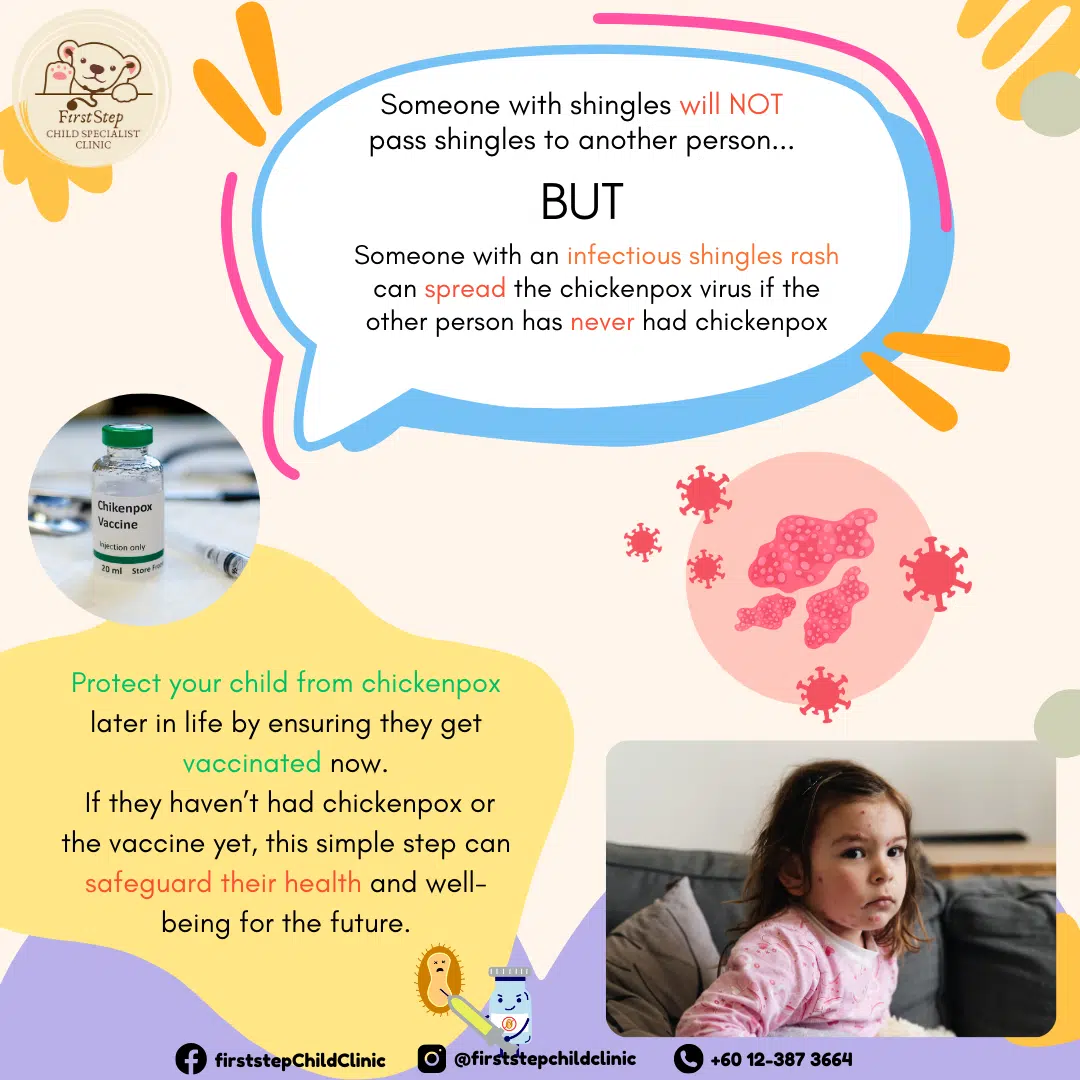
chickenpox vaccine
Vaccination is one of the best ways to reduce the risk of chickenpox and its complications.
Children who receive the chickenpox vaccine are less likely to develop severe illness. Even if they still get infected, symptoms are often milder.
Parents who are unsure about their child’s vaccination status can discuss this further during consultation.
Final Thoughts
Chickenpox is a very common childhood infection, and the rash can look quite different as it changes from red spots to blisters and finally scabs.
One of the key features parents should remember is that different stages of the rash can appear together at the same time.
While most children recover well with supportive care, monitoring hydration, fever, breathing, and overall activity remains very important throughout the illness.
If you are ever unsure whether your child’s symptoms are part of normal recovery or something more serious, it is always safest to seek medical advice.
Early assessment can help ensure your child receives the appropriate care and recovers comfortably.

Dr Soo Hui Fang