Green Mucus in Children
Green Mucus in Children
By Dr Joann
One of the most common concerns parents have when their child develops a cough, runny nose, or cold is the colour of the mucus. It is understandable to feel worried when clear mucus suddenly turns yellow or green. Many parents assume that green mucus automatically means a bacterial infection and that antibiotics are needed.
However, this is one of the most common misconceptions in pediatric medicine.
The truth is that green mucus does not necessarily mean your child has a bacterial infection, and it certainly does not automatically mean antibiotics are required. In fact, green or yellow mucus is very common during viral infections, which are responsible for most childhood colds.
Understanding why mucus changes colour and knowing when medical attention is truly needed can help parents make informed decisions and avoid unnecessary treatments.
Why Does Mucus Change Colour?
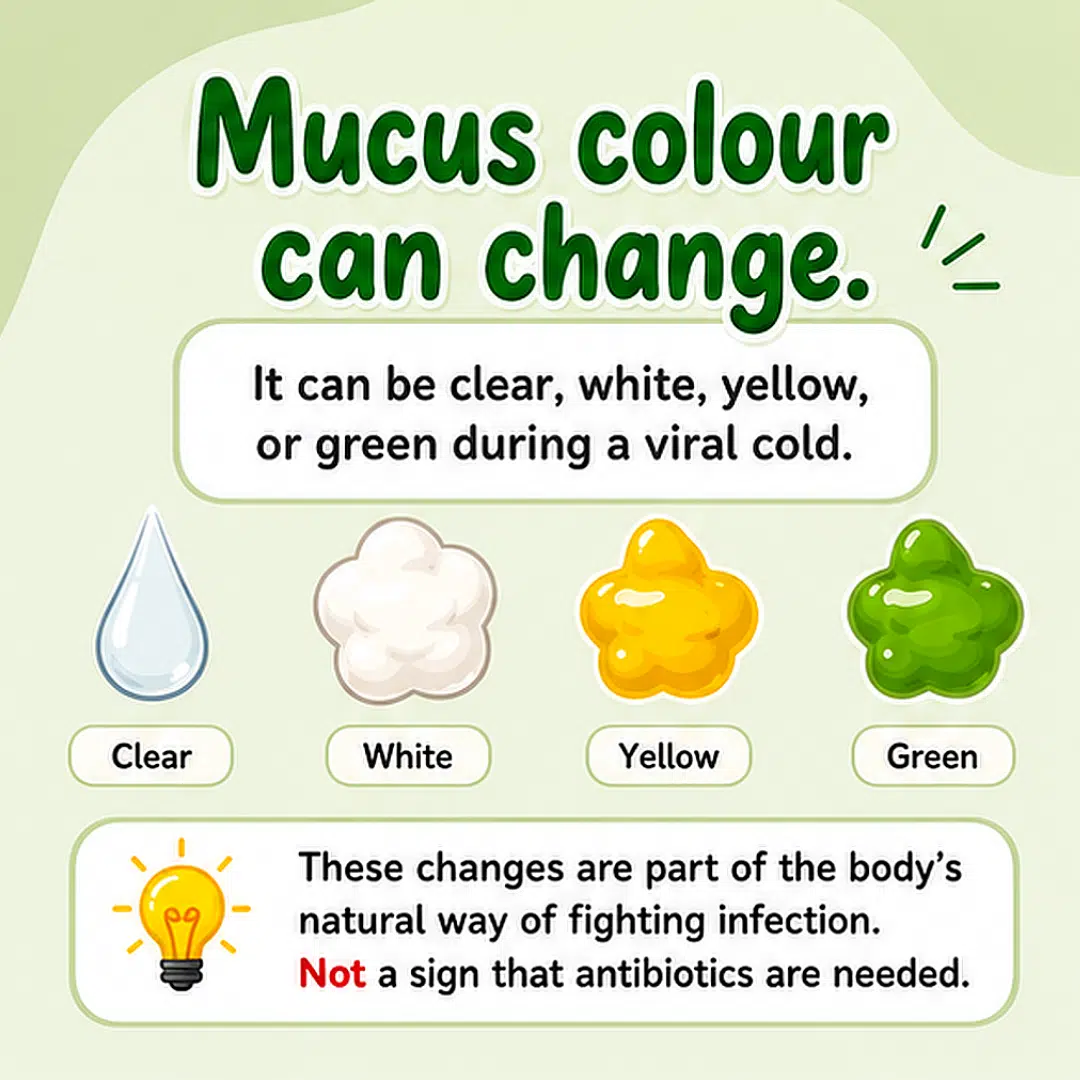
Changing colour of mucus
Mucus is produced naturally by the lining of the nose, sinuses, and respiratory tract. Its job is to trap germs, dust, and other particles while helping to keep the airways moist and protected.
When your child catches a viral infection, such as the common cold, the body activates its immune system to fight the virus. White blood cells are sent to the infected area to help eliminate the invading germs.
Some of these immune cells contain green-coloured enzymes. As the immune response increases, these cells accumulate in the mucus, causing it to appear yellow or green.
This means that green mucus often reflects the body’s normal immune response rather than indicating a bacterial infection.
It is completely normal for mucus to change from clear to white, yellow, or green during the course of a viral illness.
Viral Infections Commonly Cause Green Mucus
Most childhood respiratory infections are caused by viruses. These include:
- The common cold
- Influenza (flu)
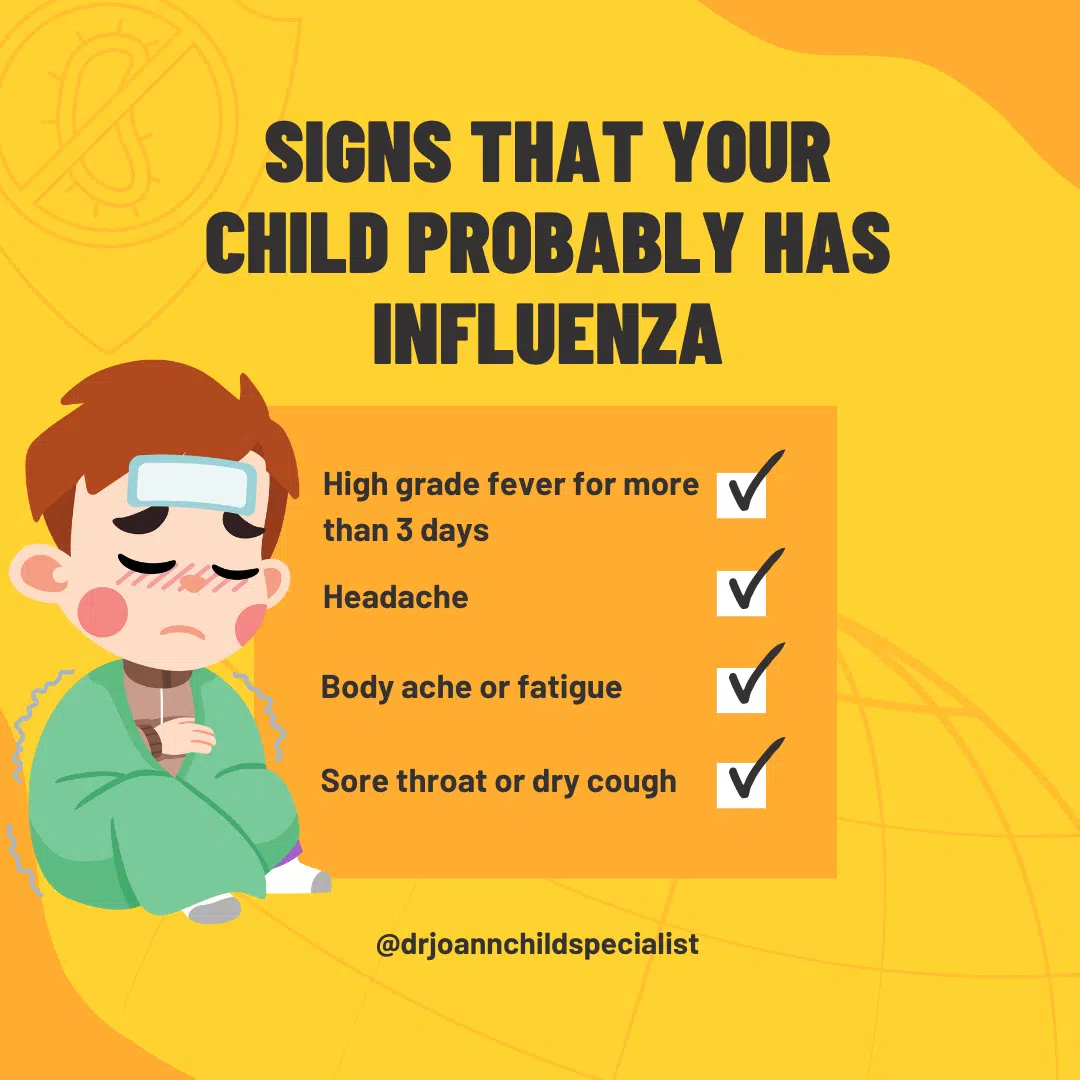
Signs that your child probably has influenza
- Respiratory syncytial virus (RSV)
- Adenovirus
- Parainfluenza viruses
- Other seasonal respiratory viruses
During these infections, children may develop:
- Runny nose
- Nasal congestion
- Cough
- Mild fever
- Sore throat
- Reduced appetite
- Fatigue
As the illness progresses, the mucus may become thicker and change colour. This is often part of the normal healing process.
Many viral infections improve gradually over 7 to 14 days with supportive care alone, without the need for antibiotics.
Why Mucus Colour Alone Cannot Diagnose an Infection
One of the biggest mistakes is relying solely on mucus colour to determine whether an infection is viral or bacterial.
Numerous studies have shown that mucus colour is a poor indicator of the cause of an infection.
Children with viral infections can have thick green mucus, while some bacterial infections may produce clear or only mildly coloured mucus.
For this reason, doctors do not make treatment decisions based on mucus colour alone.
Instead, we assess the entire clinical picture before deciding whether antibiotics are necessary.
What Do Doctors Look At Instead?
When evaluating a child, doctors consider several important factors.
1. Duration of Symptoms
The length of time your child has been unwell provides important clues.
Most viral colds improve within one to two weeks. If symptoms persist significantly longer than expected or worsen after initially improving, further assessment may be needed.
2. Severity of Illness
We assess how sick the child appears overall.
Questions we consider include:
- Is the child active and playful?
- Are they drinking enough fluids?
- Are they breathing comfortably?
- Are they alert and responsive?
A child with green mucus who is otherwise active and recovering may not require any antibiotics.
3. Physical Examination Findings
A thorough examination often provides far more useful information than mucus colour.
During an assessment, we may examine:
- The ears
- Nose and throat
- Lungs
- Breathing pattern
- Oxygen levels, if necessary
These findings help determine whether there are signs of complications such as ear infections, pneumonia, or sinus infections.
4. Progress Over Time
Doctors often look at the overall pattern of illness.
Sometimes a child may initially improve and then suddenly become much worse. This may suggest a secondary bacterial infection developing after a viral illness.
Monitoring how symptoms evolve can be more informative than a single symptom, such as mucus colour.
5. Investigations When Necessary
In selected cases, blood tests, imaging, or other investigations may be recommended.
However, these tests are not routinely required for every child with a cough, cold, or runny nose.
The decision to investigate further depends on the child’s symptoms, examination findings, and overall condition.
When Are Antibiotics Actually Needed?
Antibiotics are designed to treat bacterial infections, not viral infections.
Examples of situations where antibiotics may be appropriate include:
- Certain bacterial ear infections
- Bacterial pneumonia
- Some bacterial sinus infections
- Strep throat caused by Streptococcus bacteria
- Other confirmed bacterial illnesses
Even in these situations, the decision to prescribe antibiotics depends on careful clinical assessment rather than mucus colour alone.
Using antibiotics appropriately helps ensure that children receive the right treatment when they truly need it.
The Risks of Unnecessary Antibiotic Use
Many parents are surprised to learn that unnecessary antibiotics can sometimes cause more harm than benefit.
Potential risks include:
Side Effects
Antibiotics can cause:
- Diarrhea
- Nausea
- Vomiting
- Abdominal discomfort
- Allergic reactions
Disruption of Healthy Gut Bacteria

Probiotics and prebiotics for kids
Children have beneficial bacteria that help support digestion and immune health. Antibiotics can disrupt this balance.
Antibiotic Resistance
Perhaps the most important concern is antibiotic resistance.
When antibiotics are used unnecessarily, bacteria can gradually become resistant to them. This makes future infections more difficult to treat and contributes to a growing global health problem.
Protecting antibiotics by using them only when necessary helps ensure they remain effective for future generations.
How Can Parents Help Their Child Recover?
For most viral respiratory infections, supportive care is the main treatment.
Helpful measures may include:
- Ensuring adequate fluid intake
- Encouraging rest
- Using saline nasal drops or sprays
- Gentle nasal suctioning for infants
- Maintaining a comfortable environment
- Following your doctor’s recommendations for fever management if needed
Most children recover well with time, rest, and supportive care.
When Should Parents Seek Medical Attention?
While many viral infections are mild, parents should seek medical advice if their child:
- Has difficulty breathing
- Is breathing unusually fast
- Appears excessively sleepy or difficult to wake
- Is unable to drink fluids adequately
- Shows signs of dehydration
- Has a persistent high fever
- Symptoms are worsening instead of improving
- Develops symptoms that concern you
A professional assessment can help determine whether further evaluation or treatment is needed.
The Bottom Line
Green mucus may look alarming, but it is often a normal part of the body’s response to a viral infection. The colour of mucus alone cannot tell us whether an infection is viral or bacterial, nor can it determine whether antibiotics are necessary.
Pediatricians look beyond mucus colour and consider the child’s overall condition, symptom duration, examination findings, progress over time, and, when needed, additional investigations.
Parents should remember that antibiotics are not a cure for every cough, cold, or runny nose. In many cases, viral infections improve naturally with supportive care and patience.
If you are ever uncertain about your child’s symptoms, consult your doctor for proper evaluation and guidance. A thorough assessment is always more valuable than judging an illness by mucus colour alone.

Your trusted consultant pediatrician